

Marianne Meen and her family transformed their 1950s home into a stunning example of net-zero living while preserving the beloved look and feel of their original bungalow. This remarkable transformation highlights how thoughtful renovations can blend energy efficiency, comfort and the preservation of a home’s original appeal into a marvel of net-zero living.
Meen and her partner started with a simple plan to add a bedroom downstairs. Their project quickly expanded to include upgrading the insulation, then the windows, and before they knew it, they found themselves on an ambitious path toward renovating to a net-zero energy home. Meen says one of the reasons they decided to aim for net-zero was hearing about Edmonton’s Home Energy Retrofit Accelerator (HERA) program, which offered net-zero specific financial incentives and guidance. More than 2,300 Edmontonians took part in HERA’s rebate program between 2019 and 2023. Some of them decided to retrofit to net-zero, which means the home produces as much energy as it consumes.
“Having the HERA incentive was helpful for sure in swaying us. [Net-zero] may not have occurred to me before,” Meen reflected in our interview.
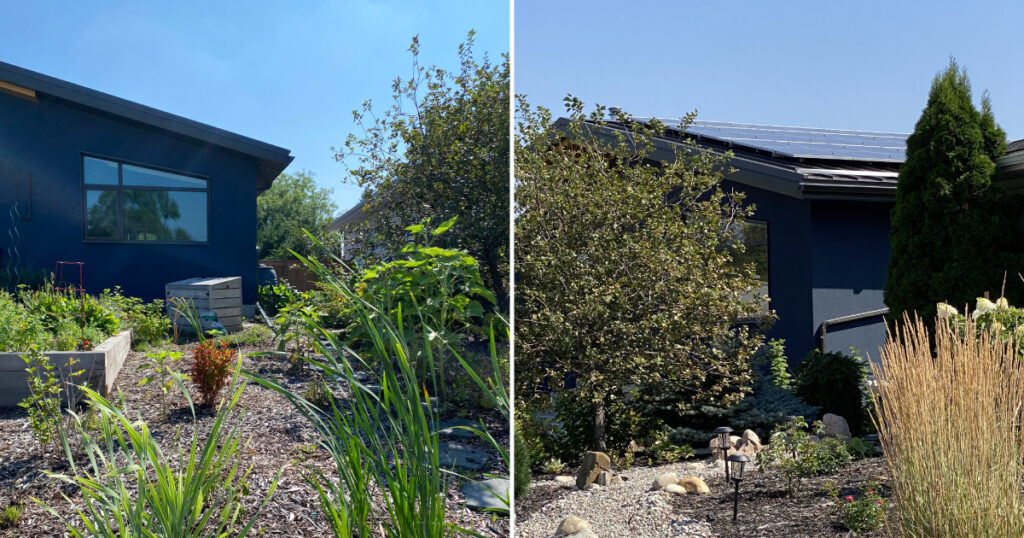
Their renovation took almost a year and was extensive. The roof was completely swapped out with a metal replacement. The trusses they installed created an open feel while accommodating a thick layer of insulation. The Meens were able to keep the home’s original floor joists, a portion of the wall joists and the foundation. To ensure a robust thermal barrier below ground, as well as above, they installed layers of insulation on both the interior and exterior of the foundation.
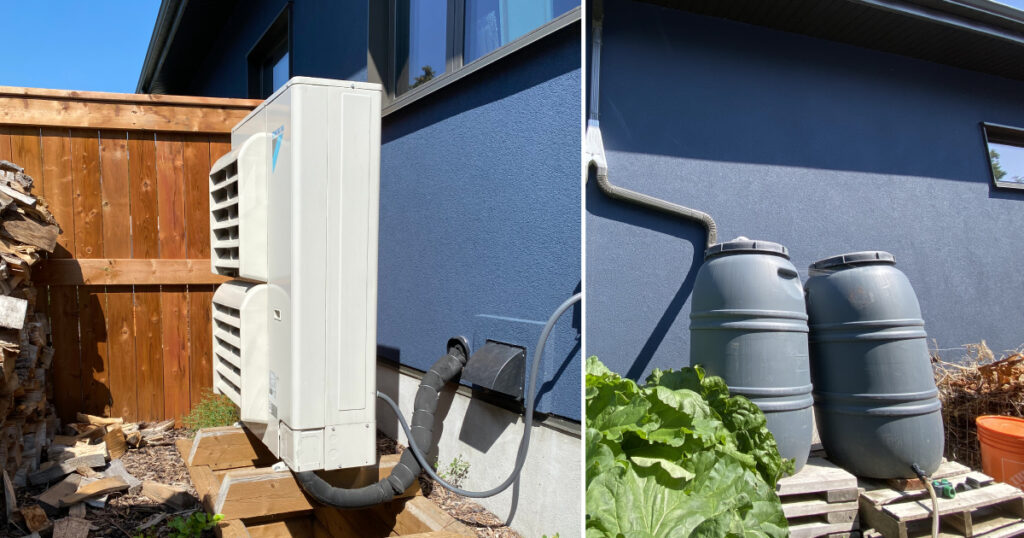
Their roof is now dominated by a large solar array, the linchpin for achieving their net-zero designation and maximizing their HERA rebate. They also installed an air source heat pump, which became their primary heat source, supplemented by a wood burning stove for extreme cold. Meen said that even at -47C last winter, the house maintained a livable 18C without the wood stove, thanks to the heat pump and excellent insulation.
When Meen and her family embarked on their journey to net-zero, they quickly realized that expertise in net-zero renovations was hard to find. Initially, they hired a contractor but soon made the ambitious decision to manage the project themselves. Through extensive research, the rebate provided by HERA, and connections with experienced friends and community members, the Meens were able to achieve their goal. Although their interior designer was initially unfamiliar with net-zero homes, she took it upon herself to conduct extensive research, and together, she and Meen crafted a plan that beautifully balanced aesthetics with energy efficiency.
The strong support from Meen and her family’s community was instrumental throughout their net-zero journey. As the renovation progressed, they found that their neighbours were not only curious but also understanding and accommodating of the lengthy construction project. Good communication was key—whether it was notifying neighbours about temporary disruptions or sharing insights about the HERA program, Meen made sure to keep everyone informed. This openness led to genuine excitement and interest in the project, with neighbours often stopping by to ask about the solar array or other upgrades. Other community members soon applied for and received HERA rebates, in part inspired by Meen and her family’s efforts.
One of the most significant benefits of the renovation was the dramatic increase in comfort during extreme weather. Before the upgrades, the bungalow struggled with sweltering heat waves, but now, thanks to enhanced insulation, energy-efficient windows and a heat pump, the home stays comfortably cool even on the hottest days. During smoke events, the tightly sealed house keeps indoor air clean and safe and in the depths of winter, when temperatures plummet, the home remains warm and cozy. These improvements have made their home a refuge from extreme weather conditions year-round.

Meen was motivated to make these enormous home improvements in part because of climate anxiety and a desire to provide a better future for her children.
“As a parent, the climate anxiety is through the roof. You’re just like, ‘What are we handing over to the next generation?’” she said.
Meen’s partner was not originally as motivated but remained supportive the entire journey. However, since the renovation, her partner was surprised to feel particularly proud of how dramatically their family has reduced their environmental impact and how significantly they are contributing to their community’s sustainability. Together, the Meens cherish the tangible benefits, such as reduced energy bills and increased comfort, and the psychological boost from knowing they are making a difference.
As Meen reflected on their journey, she felt a profound sense of accomplishment.
“You feel like you’re contributing in some big way,” she mused, “and that’s very helpful and good for the psyche.”
Meen’s advice to others considering net-zero renovations was clear: seek out experts and leverage available funding. Her story stands as a testament to the transformative power of determination, community and well-placed incentives in combating the climate crisis.
On October 17, the City launched its permanent Clean Energy Improvement Program, which provides homeowners and organizations access to low-cost financing to make energy efficiency upgrades or add renewable energy installations to their properties. The financing is then repaid by the property owner through the owner’s property taxes. Participants in CEIP can also apply for a coaching program to help them through the process.
Editor’s note: the picture at the top of the post shows Marianne Meen in the garden in front of her renovated home.
Read about heat pumps in the glossary of our “Change Homes For Climate Guide.“