

Gordon Freund still remembers Christmas Eve services at St. Paul’s Lutheran Church.
A massive tree would be brought in from the country. The sanctuary would fill with families, the swell of the pipe organ and carols. As the service drew to a close, the lights would dim.
“Silent Night was always the last hymn, sung at the end of the service,” says Freund. “The voices filling the sanctuary were very beautiful. Christmas was always very special.”
Freund was a regular presence at the Lutheran church, built by German immigrants in 1953 in just a few weeks in time for the first Christmas service. Two years later, the King Edward Park church was completed, and in the years to come, multiple renovations followed to accommodate the growing community. The day after Freund’s wedding in 1982, another expansion of the sanctuary began.
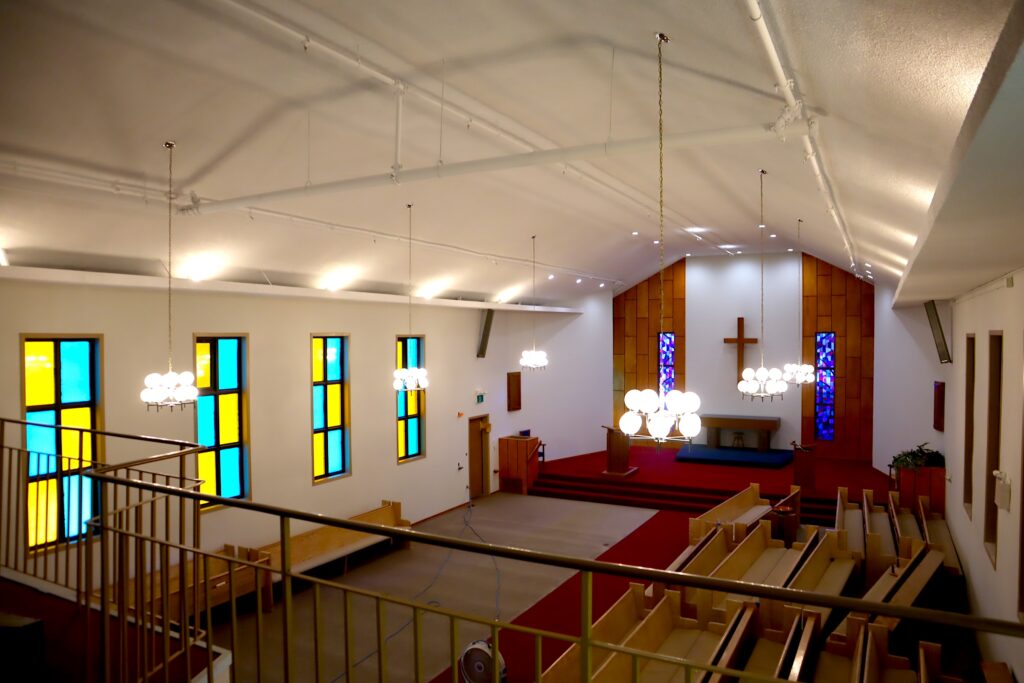
As years went by, Freund’s own two sons were baptized and confirmed there. The large German population around Mill Creek had begun to disperse throughout the City, and the church gradually made room for English speakers, the language of the next generation.
And the once-young congregation began to grow older.
Creating housing options for neighbours
Newcomers to Canada have experienced many types of welcome. From the 1960s to 1980s, Canadian governments built below-market social housing for new Canadians, seniors, families struggling with disabilities, and many other situations.
But when the federal government stopped investing in social housing in the 1990s, other governments slowed their building as well. Many experts point to this as a precipitating factor in Canada’s current housing crisis and homelessness epidemic.
In Edmonton, the economic boom of the late 2000s caused soaring rents and low vacancies, leading to then-record levels of homelessness. And while governments saw the need for a return to non-market housing, projects now depended on multiple partners aligning around projects.
“Something needed to change to start building more housing again, and it’s still a work in progress,” says Ashley Salvador, Councillor for Ward Métis. “When people don’t have a place to call home, they lose the ability to move forward. And apart from the individual struggles, it puts incredible pressure on front line services.”
In 2018, City Council approved a new Affordable Housing Investment Plan, later renewed in 2022 by the current council. Instead of waiting for multiple governments to come to the table together, the City now provides capital grants and consistent support up front to affordable housing providers, occasionally providing surplus land. As a reliable first funder, shovel-ready projects are always in the hopper, and have an easier time getting other governments to come on board.
Since 2019, the City has made significant progress on getting more housing, investing $254 million in affordable housing to help create 5,553 units, including 916 units of supportive housing. But because of the COVID-19 pandemic, an even sharper uptick in homelessness has happened due to inflationary costs, loss of social connections, and rising rents.
“It’s been an extremely difficult five years,” says Salvador. “But it’s more important than ever to do what we can to make our dollars go further and encourage the development of housing options to ensure there are homes for everyone.”
From newcomers to newcomers
At its peak in the ‘70s and ‘80s, St. Paul’s membership hovered around 600. There were two well-attended services, a choir and brass band, and multiple education and social programs throughout the week.
But by the late 2010s, all that was left were Sunday services, where attendance had fallen to around 40 faithful. Three decades after they were newlyweds, Gordon Freund and his wife were once again among the church’s youngest members.
Finances also gradually became a challenge. The house across the lane–for decades, the church-owned pastor’s home–was sold to supplement declining donations. When a Filipino congregation began using the church on Saturdays, additional income only partly helped cover the cost of keeping the lights on.
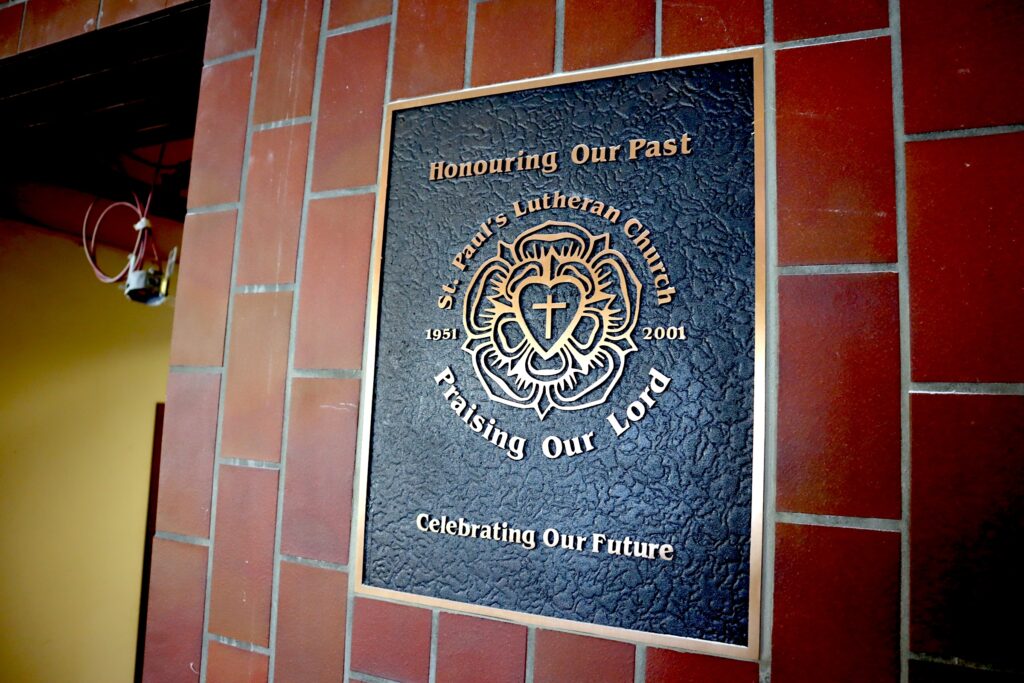
A booklet commemorating the church’s 50th anniversary noted that “our congregation lives because of its past, but not in the past.” A few years later, remaining members would be canvassed about what the future would look like.
“They all mentioned that they would like to see the sanctuary preserved and used, so it would be there as a legacy to the work they had done,” says Freund.
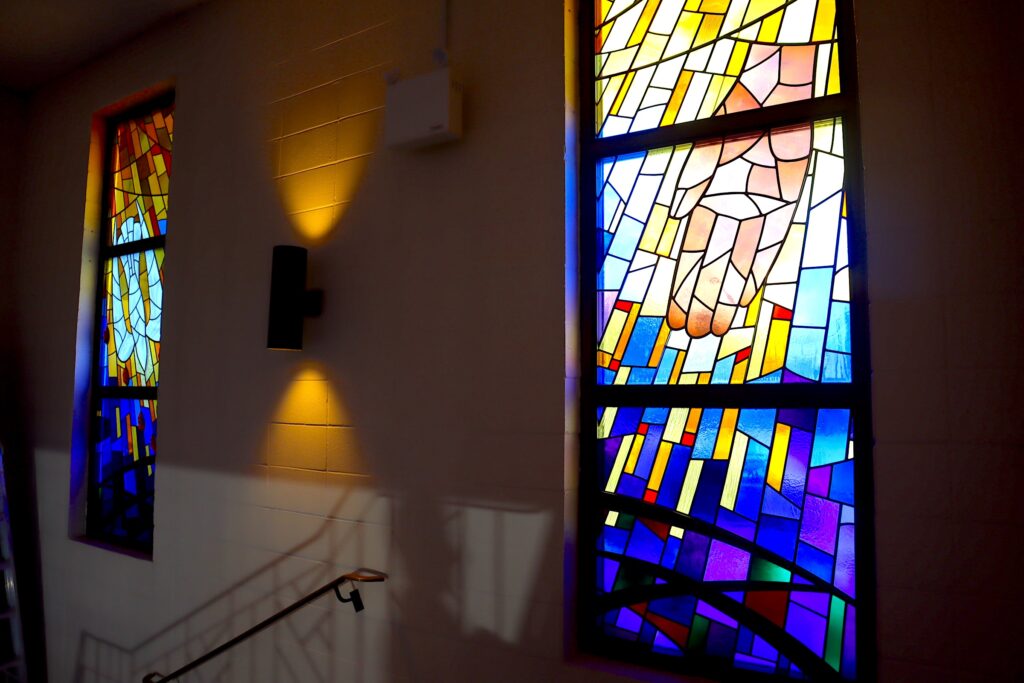
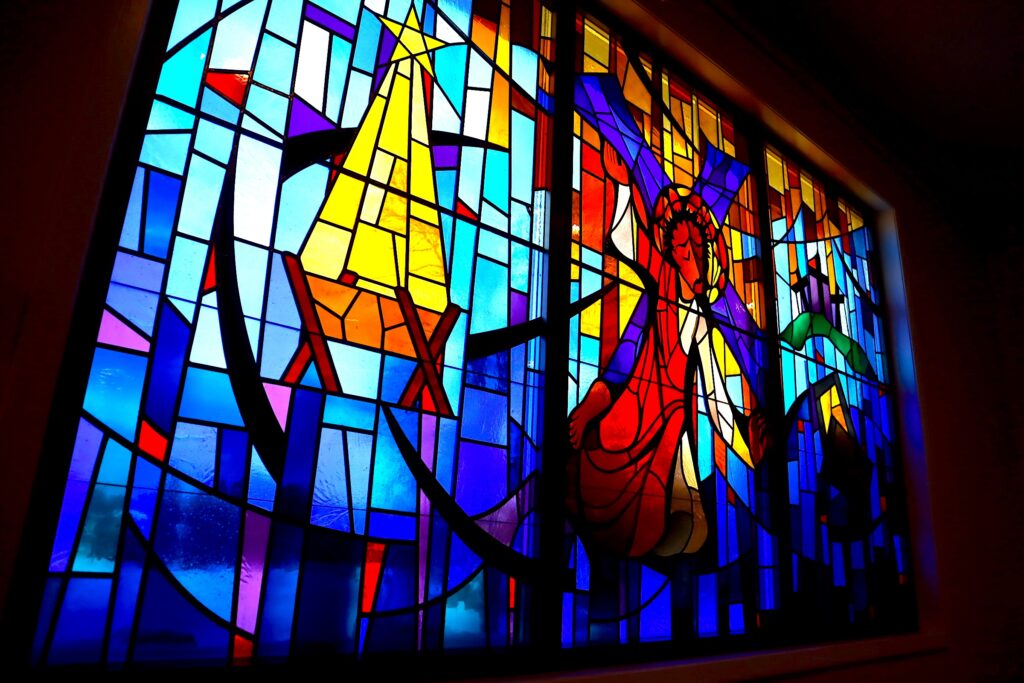
A committee was struck. The church was situated on three City lots near green space close to Mill Creek. It was prime for redevelopment. But perhaps it could be used as an interfaith space? The congregation held out hope that the stained glass–a cherished addition in the early 1980s–would be saved.
The key idea that emerged was affordable housing. The idea struck a chord with the congregation.
“Everybody thought this was a great idea,” Freund says. “When it eventually came to a vote, it was pretty overwhelming.”
The project
In 2019, St. Paul’s church council approached Right at Home Housing, which operates more than 700 homes across the city. The Edmonton-based non-profit had recently converted a Presbyterian church in North Glenora into 16 townhomes, with a brand new community space that could host services.
That other church project had proven a huge success, providing housing to Syrian refugees, while simultaneously boosting attendance at the nearby Coronation School, previously targeted for potential closure.
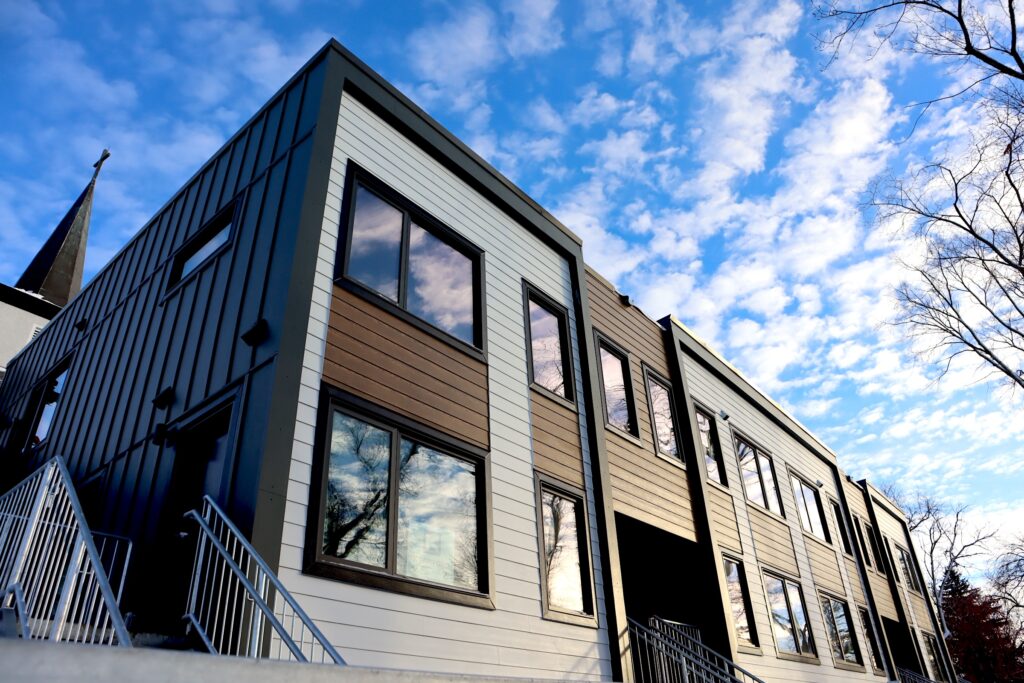
Right at Home and St. Paul’s quickly came to an agreement: the church would gift the land and building, and the housing provider would convert it to homes and a community space available to the community. The non-profit would eventually partner with multiple community groups for referrals. Four generations after immigrants placed a cornerstone, the building would once again open its doors to other Edmontonians, including more newcomers to Canada.
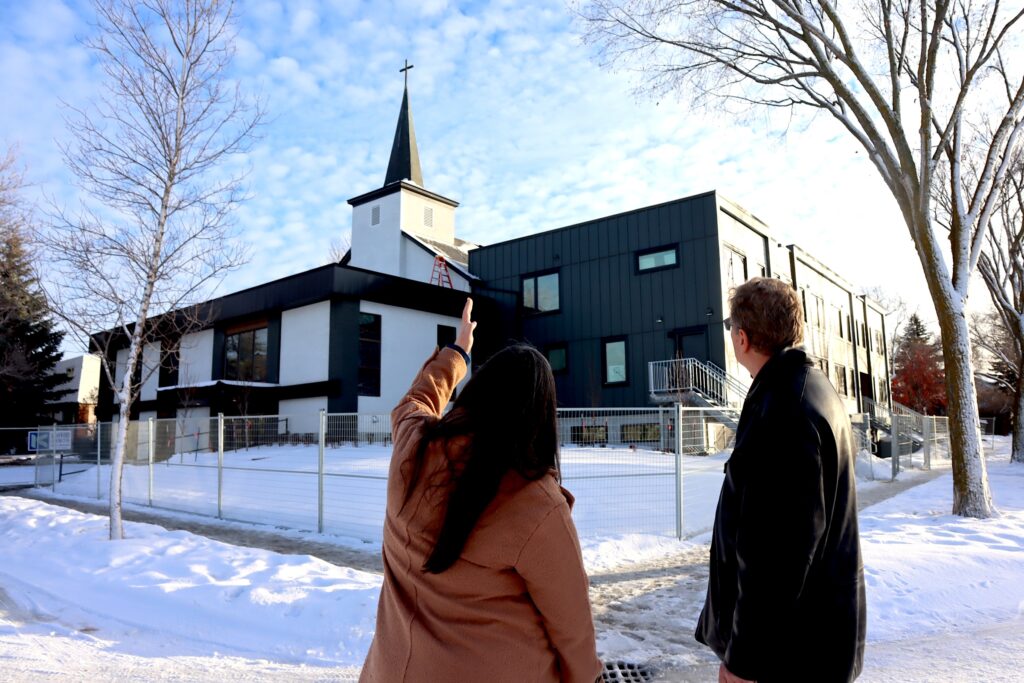
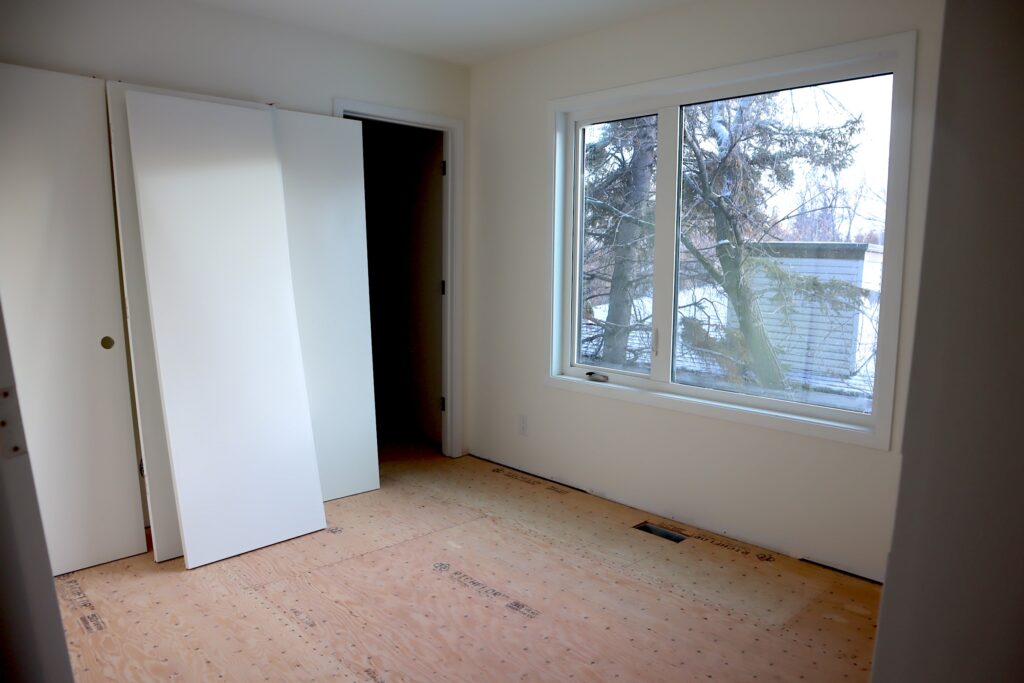
The project includes 11 units of affordable housing, including two 4-bedroom units and two two-bedroom units. Two of the seven one-bedroom units on the bottom floor will be accessible for individuals with mobility challenges.
“This is the Edmonton I know and love,” said Salvador, who recently celebrated the project’s progress at an official announcement. “It’s amazing to see neighbours pull together to find ways to make something new while remembering our past.”
The City’s new housing grant program aligned perfectly with St. Paul’s ambitions. In 2019, Right at Home Housing received an AHIP grant for $689,000. The Government of Alberta later joined in with another $900,000 from the provincial Affordable Housing Partnership Program.
But when the COVID-19 pandemic struck, rising construction costs threw the project into jeopardy. The project was reprofiled and submitted through the Rapid Housing Initiative–a new federal program aimed at quickly increasing supportive and affordable housing during the economic devastation of the pandemic.
The project received nearly $2.8 million from the Government of Canada, enough to take it across the finish line.
Building affordable options
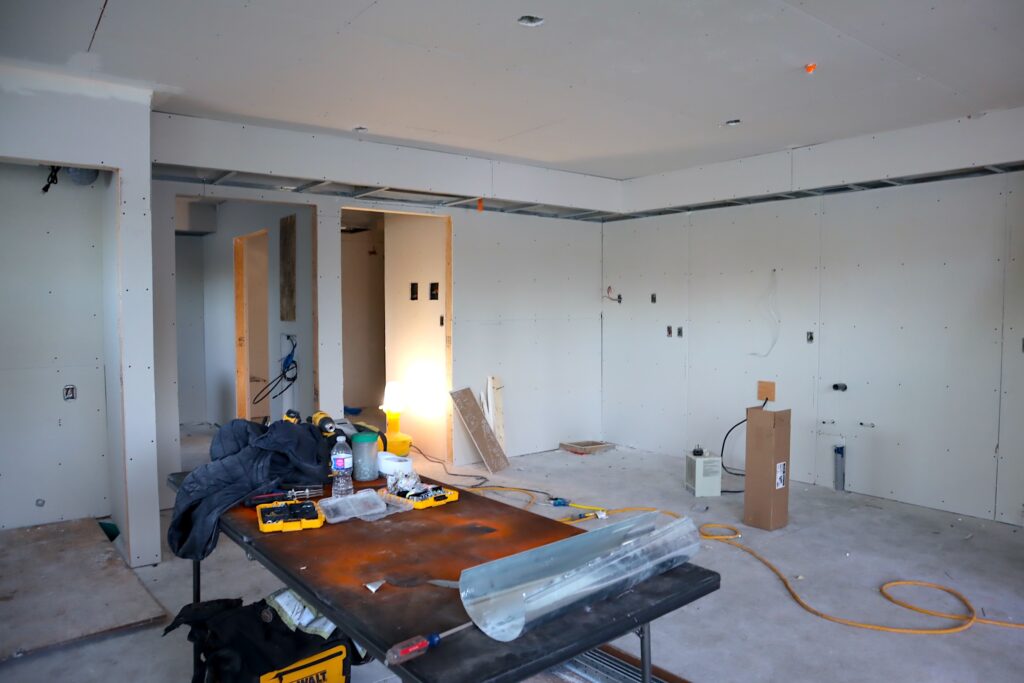
For Gordon Freund and the St. Paul’s congregation, fond recollections are all that remains of the idyllic Christmas Eve services of years gone by. Renovations and construction on the converted building will be wrapping up shortly after Christmas.
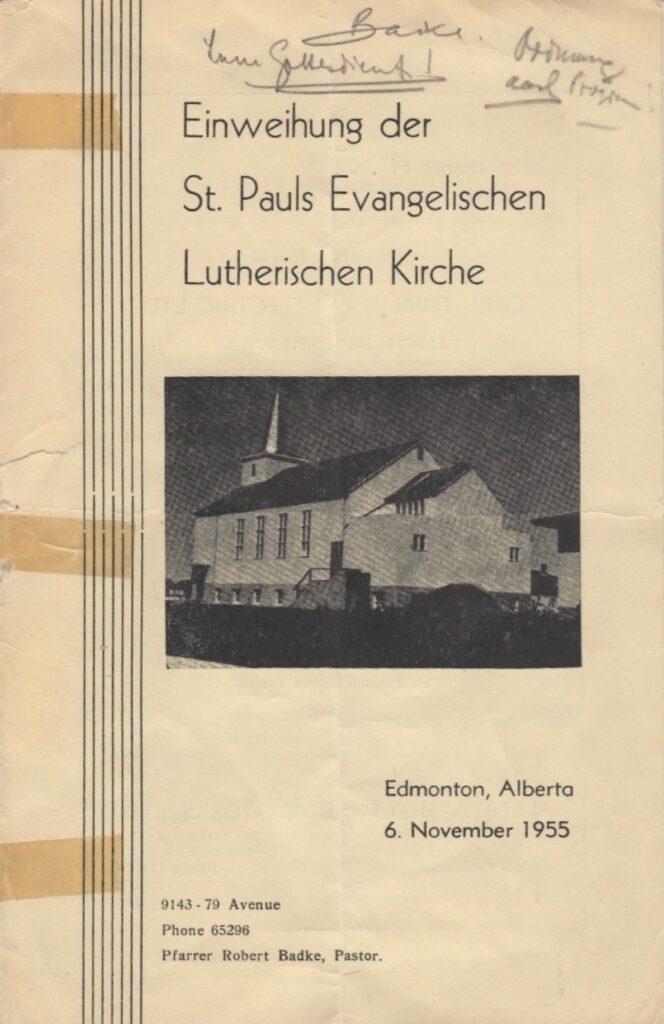
Services ended in 2019. Freund recently received notice that the church had been deregistered as a charity. A few more weeks from now, more than 70 years after its founding, St. Paul’s Lutheran Church will be dissolved as a legal entity.
For the first time in many years, however, congregants are making new celebration plans. Freund has already heard the excitement from a former pastor, and families who helped renovate the building.
If all goes as planned, the new housing complex will open in early 2025, with the congregation invited for an open house, a final coffee and cake to mark a new chapter.
“They’re pleased and excited about how the church looks, the affordable housing units being built,” Freund said. “Everybody is really happy about it.”
Editor’s note: the pic at the top of the post shows Gordon Freund standing outside the former St. Paul’s Lutheran Church in King Edward Park, where he and his family attended for decades.