

Ken and Janice Lypkie’s home and yard in Whitemud Creek is a beacon for climate-friendly living. The couple is a phenomenal example of Edmontonians doing their part to address the climate crisis by changing their habits to reduce their impact on the planet.
In August 2019, Council declared a climate emergency and voted to increase the city’s greenhouse gas emission reduction targets. In order to achieve this, Edmontonians need to take part in reducing the impact of their actions.
Motivated by a deep desire to leave a better world for their children, grandchildren and future generations, the Lypkies work together to sustainably grow food, beautify their space with native species, care for multiple beehives and reduce their carbon contributions.
For Ken, growing up, it was common practice for his family to grow a majority of their own food. “It was important for us to have the garden because that was our food,” he says.
Janice shares her husband’s dedication to sustainability and has taken a local master organic gardener course. These experiences, and the couple’s love for their family and the planet, guide their home gardening efforts.
Gardening is a family affair for the Lypkies. Their son helped build the above-ground planting boxes that Ken and Janice use to grow the majority of their fruits and vegetables. Now the couple’s grandchildren are able to pick strawberries from those planters, which Ken says is the first thing they ask about when they visit. Together, the Lypkies have passed on their dedication to the environment to their family and created a home that exemplifies eco-friendly living.
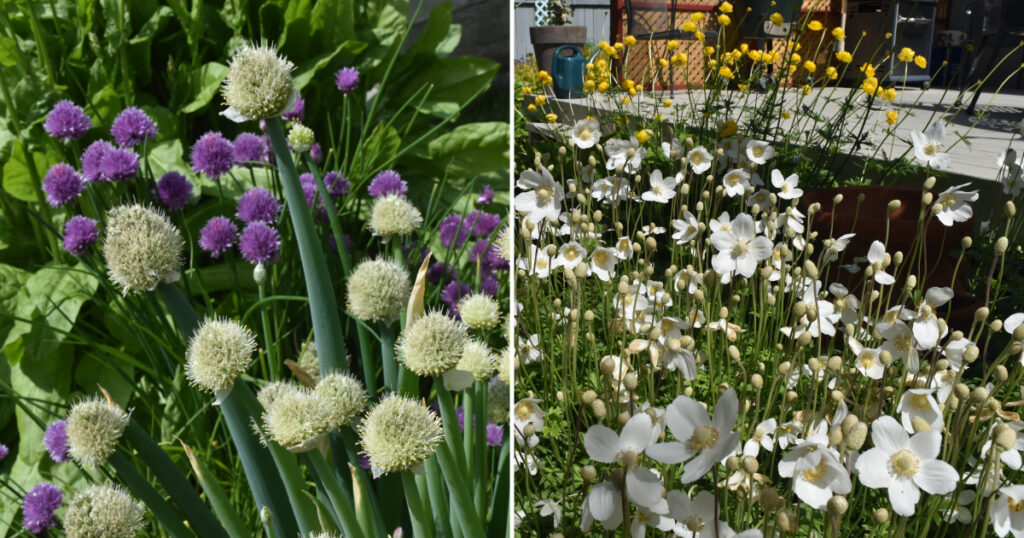
Ken and Janice’s passion for growing their own food is perfectly complemented by their commitment to using native plants as much as possible to beautify their space and attract native pollinators. Over time they have replaced much of the grass on their property with garden beds bursting with buds. They have prioritized native perennials like Bergenia, Saskatoon Serviceberry and Columbine wherever possible, selected specifically to thrive in the conditions within their yard.
(Every yard has different factors—for example, soil type, drainage and amount of sun and shade—that influences what can be grown, so what’s not possible in one yard might be in another. For more information about microclimates, check out our Change For Climate Talks: Adapting our Landscape to a Changing Climate.)
The Lypkies’ yard is lined with various cold hardy fruit trees and bushes, including apples, cherries, plums, pears, raspberries and more. “If you can’t eat them, don’t grow them” is Ken’s philosophy. His tip for successful fruit tree growth in Alberta’s climate is to purchase grafted saplings that are grown in climates similar to our own. So when buying young trees, he recommends ones grown in Alberta or Saskatchewan.
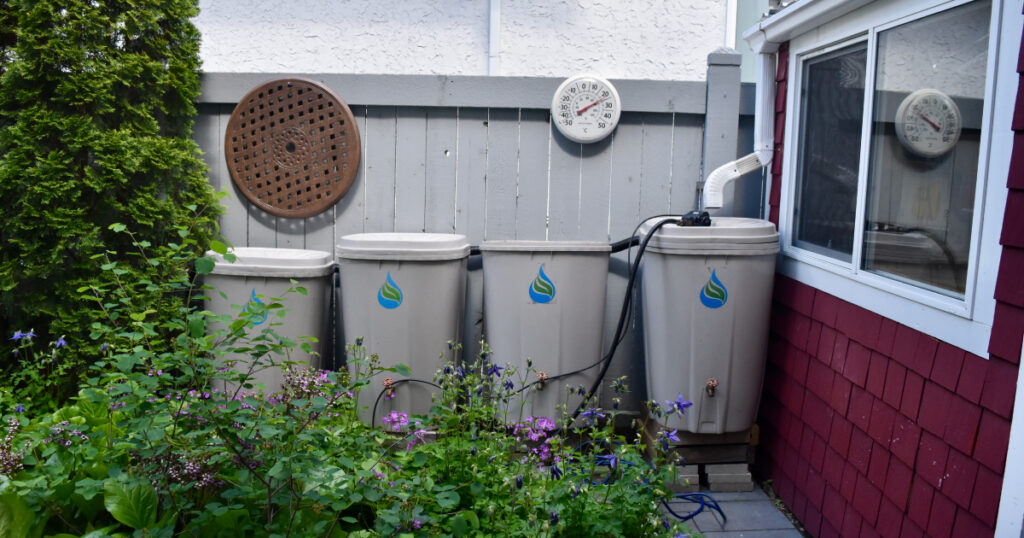
Throughout the couple’s stunning yard are 14 rain barrels that can hold almost 3,000 litres of rain water. This rain barrel system is used in combination with a pump that removes stagnant water from a low spot on their property and pumps it into the rain barrel system. Between the water barrel system and their extensive gardening, they have developed an impressively water-efficient property.
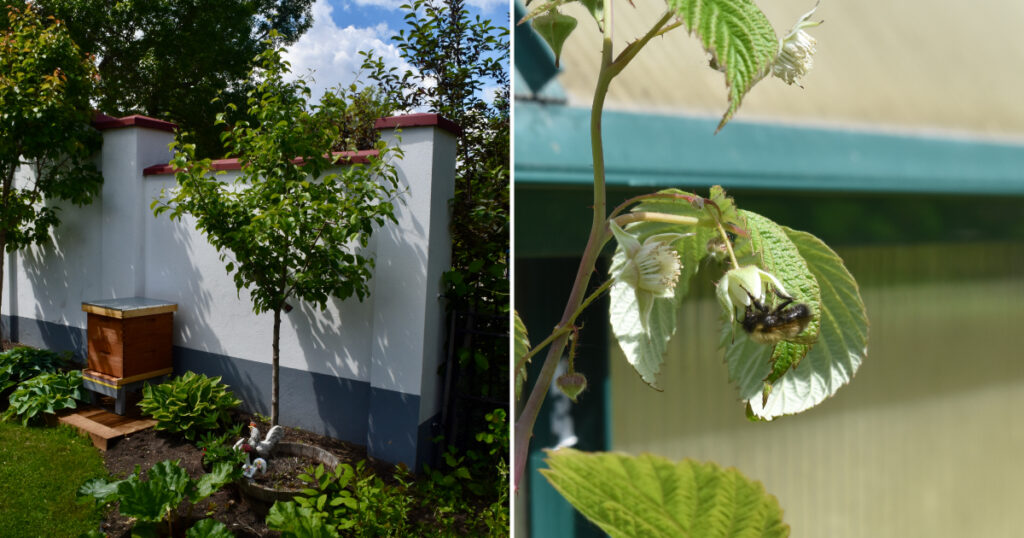
To reduce their carbon footprint, the Lypkies have rooftop solar panels that provide clean energy and they drive an electric vehicle. They compost with a three-bin system, turning kitchen scraps into nutrients for their gardening boxes, which are packed with fresh vegetables and herbs. To further enhance their sustainable lifestyle, Ken and Janice have even introduced beehives.
“We’re losing our pollinators; let’s do something,” says Ken, highlighting their commitment to supporting the local ecosystem and ensuring the health of their garden.
Through their efforts, the Lypkies not only reduce their environmental impact but also inspire those around them to adopt greener practices. Ken’s advice to others is straightforward: “Just start … It’s doable, whether you have one [garden] box or 15 boxes.”
The City of Edmonton celebrates their journey toward a climate-friendly home, highlighting the power of individual actions in creating a sustainable future.
Editor’s note: the pic at the top of the post shows Ken and Janice’s backyard full of garden boxes and trees, and solar panels on their roof‘.