

Edmonton is synonymous with energy.
The oil and gas industry has long been part of the city’s identity and, in recent years, Edmonton has become home to innovators looking to build a more sustainable energy sector.
Their work has the potential to contribute in many ways—from improving the safety of pipelines to extending our EV-charging network to expanding our use of wind, waste, renewable natural gas and hydrogen as low-carbon fuels and energy sources.
Some of Edmonton’s innovators are also recipients of the City of Edmonton’s Edge Fund grant program, which supports local businesses in various sectors, including energy and sustainability, that benefit Edmontonians.
Read on to learn more about the key local innovators.
Monitoring pipelines and their perimeters
Canchuks Corrosion Inc. received $91,800 in funding to develop inspection technology that allows workers to study the integrity of underground pipelines from above-ground.
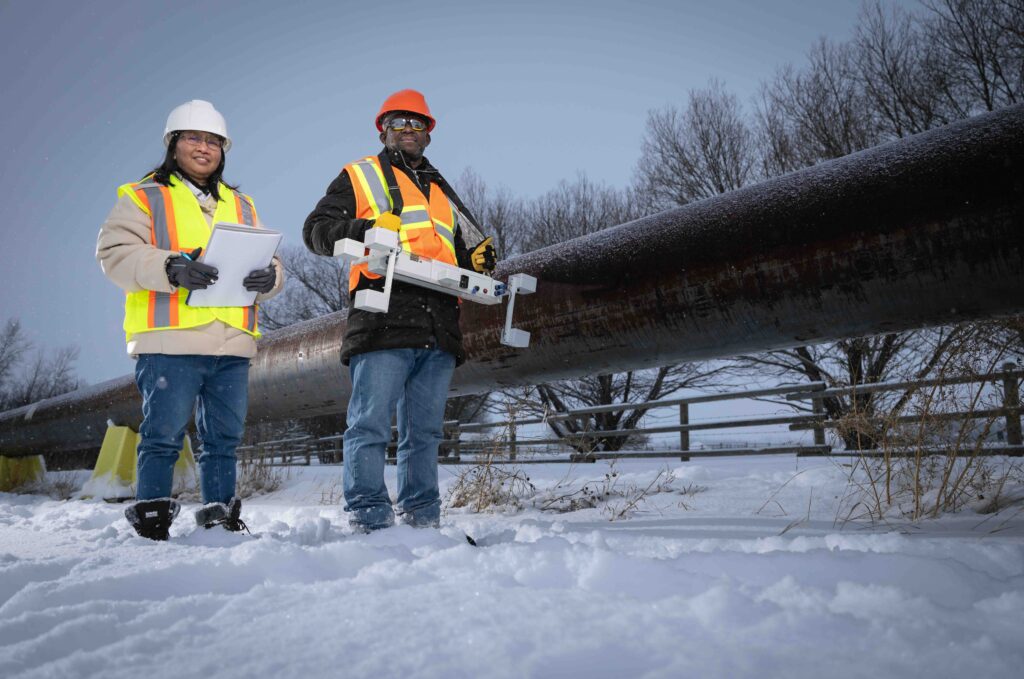
Alberta has more than 440,000 kilometres of oil and gas pipeline. Keeping those pipelines in good repair is imperative to ensuring the sustainability of this industry, and preventing harm to the environment.
Using magnetic waves, this technology allows potential issues to be diagnosed more accurately in areas inside the pipeline that are inaccessible to sight or contact. Being able to monitor pipelines in this way improves their safety and longevity, allowing for proactive and preventative maintenance, ensuring spills and disasters are avoided and the surrounding environment is better protected.
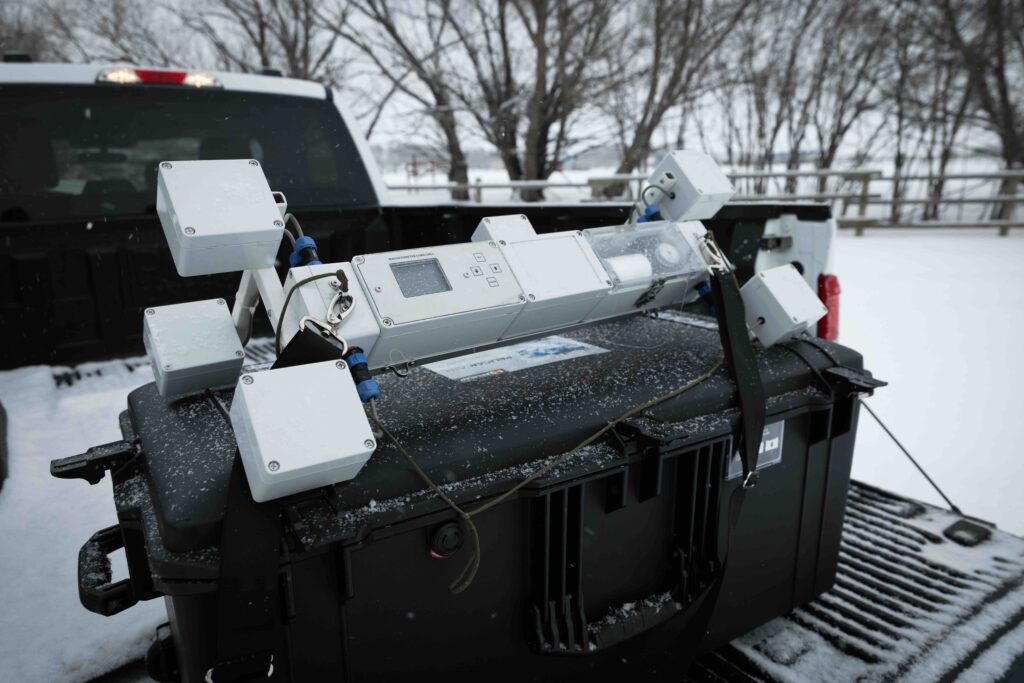
“I am appreciative to have been selected for this funding to help complete field validation of our innovative MTM-G technology,” says Dr. Chukwuma Onuoha, the President, CEO and Principal Corrosion Consultant of Canchuks.
“This grant will help expedite the full commercialization of this technology and support an economic boost in Alberta.”
Innovating EV infrastructure
Did you know that 30 per cent of our emissions in Edmonton come from ground transportation? As the city (and the world) moves toward a more sustainable future, the drive to diversify how we fuel our vehicles becomes increasingly urgent. This includes expanding charging networks for electric vehicles in anticipation of a future with more affordable and winter-resistent electric options for everyday drivers.

Electrification of our transportation system, from electric vehicles to e-bikes, helps to reduce our emissions and our reliance on fossil fuels.
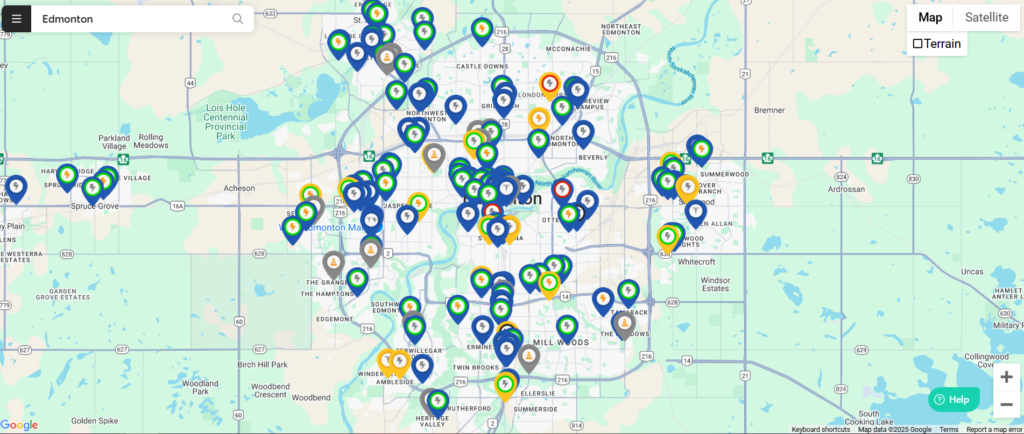
Currently, Edmonton has 376 public charging stations, with popular ones being at the Jasper Place Edmonton Public Library, at hotels downtown, and at shopping malls like West Edmonton Mall, Southgate Mall and Londonderry Mall.
Swift Charge, a University of Alberta spin-off company, creates EV-charging stations that can be installed and operated without expensive upgrades to the existing grid infrastructure. The Edge Fund awarded $100,000 to Swift Charge to develop a faster charger, ensuring electric vehicles are able to make shorter stops to charge up their batteries.
“The Edge Fund helps us continue our commercialization of our proprietary EV charging stations,” says Sheldon Zhang, CEO of Swift Charge. “With the help of Edge Fund, we are able to speed up the testing and deployment of our chargers.”
For those considering an EV, you can learn more about EV myths, incentives to owning an EV and more at edmonton.ca/electricvehicles. To find a charging station near you at chargehub.com/map.
Improving how we harness the wind
Diversifying our energy sources also extends to how we power our homes.
International Renewable Energy Systems Inc. (IRES), a clean energy company based in Edmonton, is developing new wind turbine technology. Their vision: to facilitate the transition of a million homes, businesses and communities to clean energy by 2050.
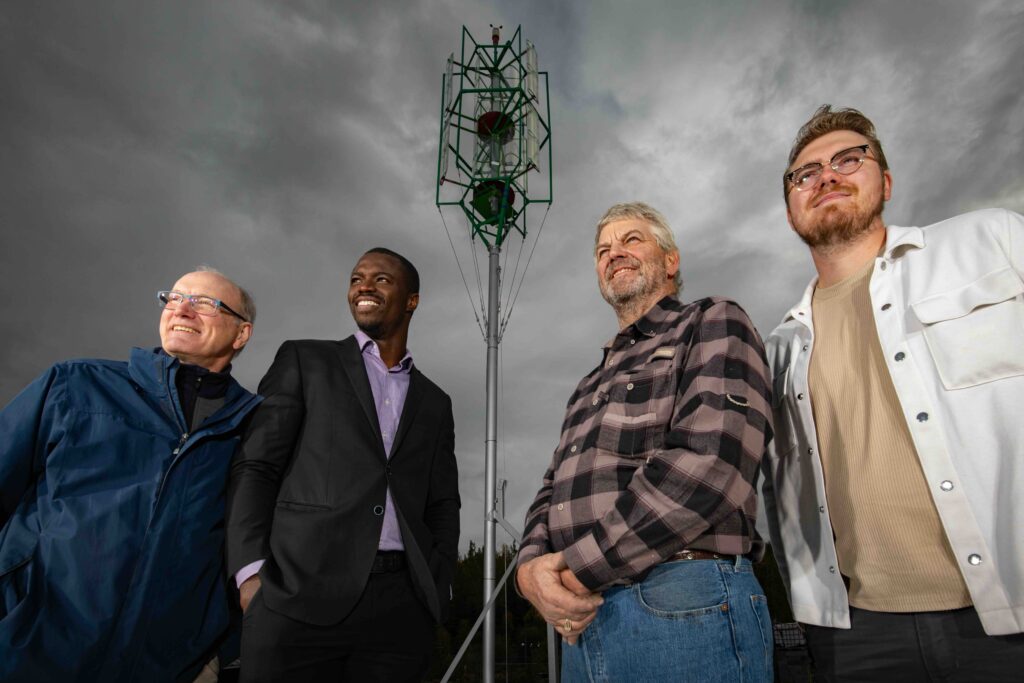
IRES received an Edge Fund grant of $100,000 to develop prototypes of its vertical-axis turbines, which can be used to power residences and other small-scale applications. The blades of IRES’ device are intended to be quieter and to avoid killing or injuring birds, reducing the negative impacts on both biodiversity and people’s quality of life that can come with typical wind turbines.
“The Edmonton Edge Fund has been instrumental in kicking off our new turbine technology development journey,” says Chris Chukwunta, CEO of IRES.
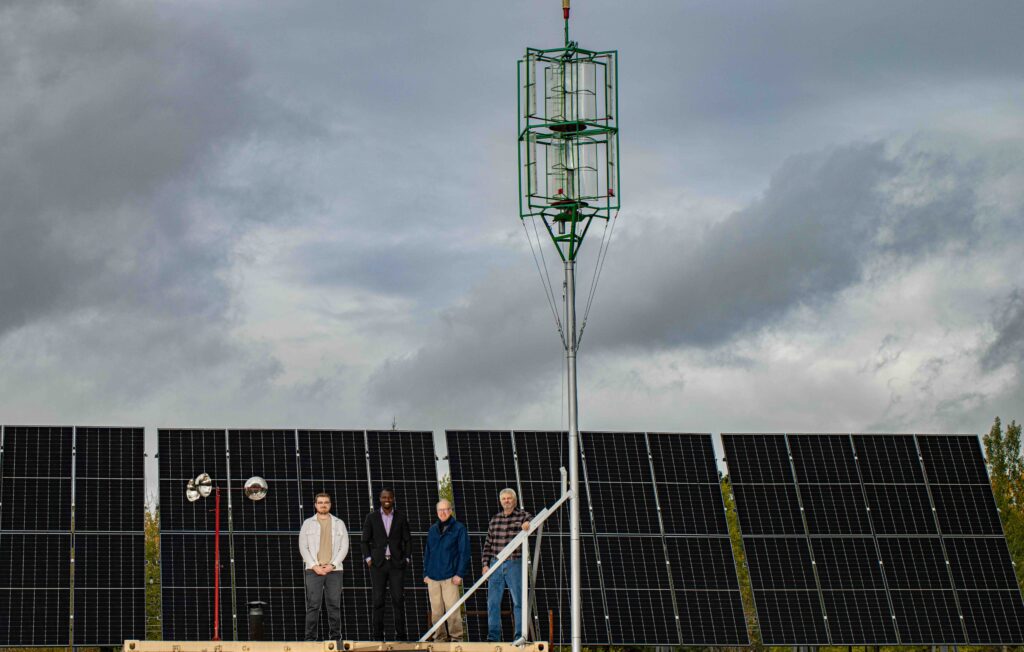
“One year along, we have built three progressively improved prototypes and our third prototype has been deployed in a farm south of Warburg, with our sales-ready products anticipated in 2026 … [We] are more than ready to achieve our goal of making the Canadian-built wind turbine technology the best product in the market so its benefits can be enjoyed.”
Turning garbage into gold
Waste is another alternative energy source and Optimal Combustion, a local company, is harnessing it. The amount of municipal waste generated per person can vary from 0.5 up to 2.5 kilograms per day, per person, depending on the country and level of affluence.

Waste-to-energy (WTE), with carbon capture, can be a great alternative fuel. Optimal Combustion converts existing biomass (such as wood and crops), bio-gas and waste into energy. The company also provides consulting, training and collection services that help facilitate WTE processes.
With the hopes of providing renewable energy for our everyday necessities like heat, power, hot water and waste management, Optimal Combustion is prototyping its own self-sustaining mobile utility system in industrial work sites. With $100,000 from the Edge Fund, the company has been able to continue work on this project, acquire critical equipment and encourage further investments in WTE.
“[The funding] has also helped us build connections with government agencies, develop global export strategies, and collaborate with educational institutions on transformative projects, solidifying Edmonton as a hub for innovation and economic growth,” says Ashif Hussein, Director of Business Investment with Optimal Combustion.
The company has also used the grant and support from Global Affairs Canada to establish collaborative partnerships with businesses to implement projects in developing countries. Closer to home, Optimal Combustion has initiated work with Indigenous communities in Alberta focusing on sustainable and mutually beneficial energy initiatives.
Editor’s note: the pic at the top of the post shows Karen Panganiban, magnetic specialist with Canchuks Corrosion Inc. at a pipeline near Edmonton on January 30, 2025.
This article is the second in a series about the City of Edmonton’s Edge Fund. (Here’s part one.) Learn more about another recipient, Dark Matter Materials, and its work to build a hydrogen on-demand generator, in this story on Why Edmonton.