

Even on the coldest days, construction continues at the southwest corner of 87 Avenue and 159 Street in the city’s west end. When it’s complete next spring, the five-storey building will offer 218 new rental apartments within footsteps of grocery stores, shops, health services and transit, including the future Valley Line West LRT.
It’s a rare opportunity to bring new housing to an established neighbourhood undergoing big changes.
“Two acres right on a future LRT line, that’s not something you typically find,” says Daniel Demers of RMS Group of Companies, the development company behind the project.
Meadowlark Apartments, as the project is currently known, is one of six developments— totalling 1,043 new housing units—that has been supported through the City of Edmonton’s Infill Infrastructure Fund since it launched last August. The fund, which is paid for by the federal government’s Housing Accelerator Fund, was created to remove a significant barrier to the development of apartment buildings in existing neighbourhoods—the cost of upgrading offsite public infrastructure shared by more than one parcel of land.
To receive funding, market housing developments must have 10 or more units and be located in Priority Growth Areas or near LRT stations roughly inside Anthony Henday Drive. Affordable housing—housing offered at below-market rates for households that earn below median income for their size—is also eligible for funding and can be located anywhere inside the Anthony Henday.
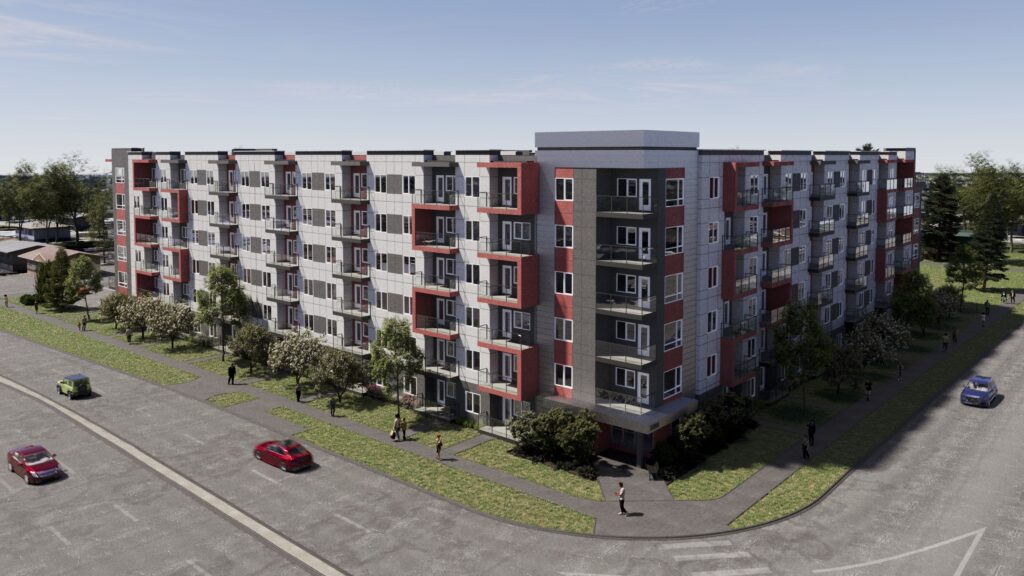
Meadowlark Apartments will receive funding to upgrade electrical power that runs from the development site to Whitemud Drive, providing reliable and more efficient electricity for future residential development all along 159 Street. The fund will also pay for required upgrades to the adjoining alley, making it easier for future development to the south.
In greenfield areas, where the land is undeveloped, there are established ways for developers to share the cost of public infrastructure like alleys or electrical power. But for infill development, the first developer in an area often pays for upgrades that will also benefit future projects, with limited ways to recoup their costs. That kind of upfront investment puts infill development at a disadvantage compared to greenfield development.
“Every single infill project we’ve done has had significant offsite and onsite infrastructure costs by virtue of where they’re located,” says Kevin McKee, CEO of Pangman Development Corporation. “Whether that’s a relocation of a utility, gas, sewer, telecommunications—it can be a very significant component of the cost to build an infill project.”
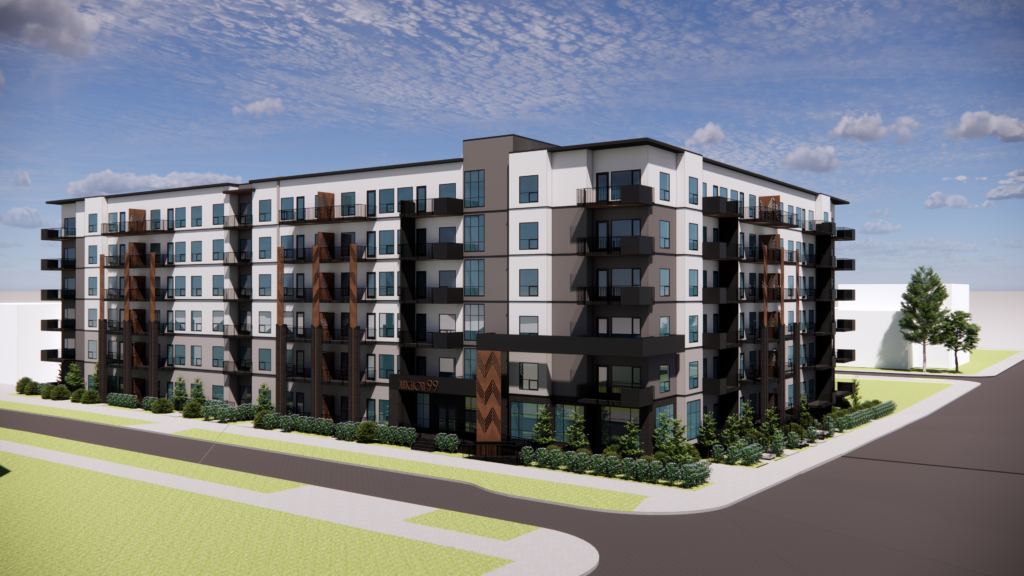
Pangman is developing Junction99, a six-storey apartment building with 165 units at 99 Street and 89 Avenue in the neighbourhood of Strathcona. The fund will help cover the cost of electrical work, a new sewer, alley upgrades, and a new fire hydrant, propelling the long-awaited redevelopment forward.
“It’s helped continue the momentum that has been generated,” McKee says of the City’s fund. “It helps us continue to build new infill rentals. Without the fund, that would be a lot more difficult to do.”
Programs like the Infill Infrastructure Fund are designed to help achieve a balance between new residential development in developing areas and in established neighbourhoods. With Edmonton’s population growing rapidly and anticipated to reach 1.25 million by next year, the need for more and different types of housing is growing too.
The supply of purpose-built rentals declined for more than two decades, starting in 1990. Though the trend is now changing, construction has still not kept pace with the growth of the number of renter households in Edmonton. According to the 2021 federal census, Edmonton had 143,000 renter households and a supply of 78,000 purpose-built rental units.
Meadowlark Apartments is being built on the northeast corner of the Elmwood neighbourhood, where it meets neighbouring Lynnwood, Jasper Park and Meadowlark Park. Neighbourhoods like these, which were once the suburbs of Edmonton’s core, are now well established and entering the fourth phase of the neighbourhood life cycle: growth, build out, maturation and change.
Demers says the new housing, along with investment in the LRT, will bring density and vibrancy to the community while providing more housing options for residents, new and old.
“For people who have grown up here or lived here for many years, it gives them an option without having to leave. It allows them to still enjoy the community that they’ve grown to love,” he says.
McKee agrees, pointing to another Pangman development that replaced three single detached houses with 48 apartments at 142 Street and 100 Avenue. Where maybe 10 people once lived, there are now 75 residents that can shop local businesses, take the future LRT and be part of the west-end Grovenor community.
Infill, he says, can “be designed respectfully, built respectfully and it can add to the community.”