

On a cold afternoon in November, a young man was seeking warmth in a stairwell leading to the Central LRT Station. He wore a light jacket and carried his belongings in a plastic bag.
A Transit Peace Officer and an outreach worker from the Bent Arrow Traditional Healing Society approached the man. Not to move him along or push him out into the cold, but to offer him something to eat and ask him if he had a warm place he could go. He accepted a small bag filled with a variety of snacks, a bottle of water and some packs of disposable hand warmers and told them he had a safe shelter for the night.
Wendy Shaw was the outreach worker who responded to the man.
“When we see someone, we just walk by and ask, ‘Are you OK? Do you need anything from us?’ We give them the chance to tell us what they need,” she explains.
Understanding, experience and safety
Shaw’s encounter in the LRT station is part of her work with the Community Outreach Transit Team (COTT).
The City of Edmonton launched the team in response to the growing number of vulnerable people turning to transit spaces for warmth, safety and a place to go. COTT began as a pilot, pairing Transit Peace Officers (TPOs) with trauma-informed outreach workers, during the height of the pandemic in 2021. The team became a fully funded program in 2023.
The outreach workers bring understanding and experience supporting individuals facing homelessness, mental health challenges and substance use issues. TPOs bring skills in safety and de-escalation and a compassionate approach grounded in relationship-building rather than strict authority.
Together, they create a bridge for people who may not know where else to turn.
“We help people facing difficult situations by asking them if they need help with referrals for addictions or finding shelter, because a lot of folks come here from other cities and often don’t know what to do,” says Mariah Mcleod, who serves as the Bent Arrow Team Lead for COTT.
“A lot of those folks cycle back through a revolving door of not having the help they need. The negative perceptions people have about vulnerable populations can harm our humanity and compassion, and can lead to transit feeling less safe for everyone.”
Connections and cultural practices
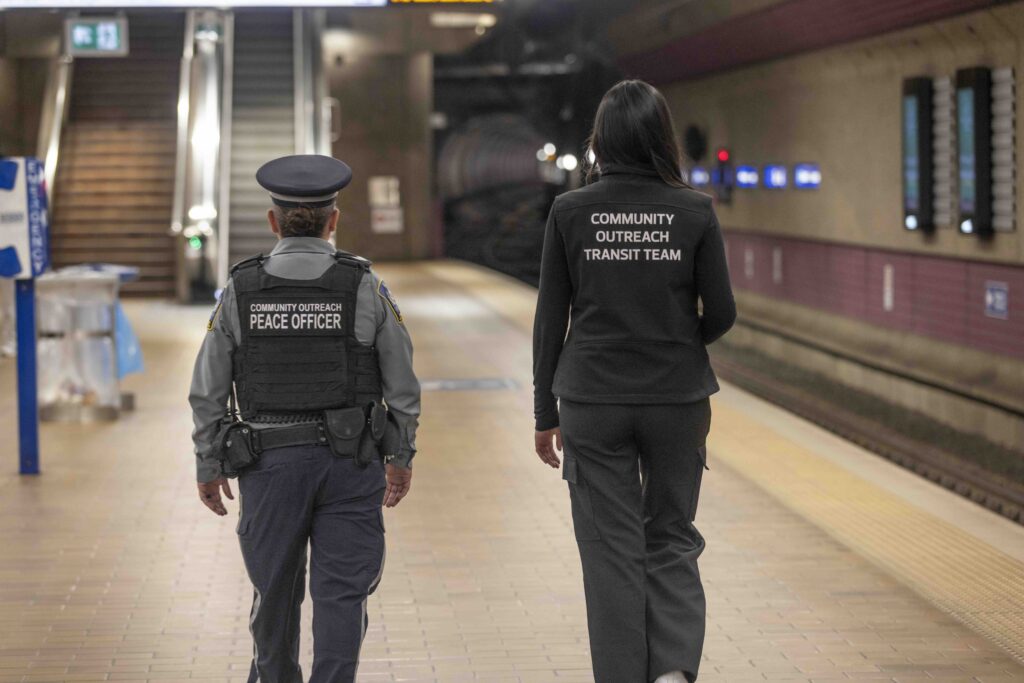
Every day of the week, COTT moves through transit centres and LRT stations, checking in with people who may need support. Their work isn’t about ticketing people or moving them out of the station; it’s about connecting marginalized Edmontonians to the services and resources they need to stay safe, especially during extreme weather.
“Recently, we were at the Capilano Transit Centre and came across a woman who was obviously in distress,” says Officer Jaskirat Mahajan, who has served as a Transit Peace Officer for two years.
“She was looking for help with a bus transfer, and we asked her where she needed to go. She gave us an address on the other end of the city, and I contacted her mother, who lived there, to confirm. It turns out her mother was taking care of the woman’s two children who she hadn’t been able to visit for some time. We drove her to her mom’s house, and she was able to reunite with them.”
In addition to having extensive training to support people in need, COTT members are also trained to understand and use cultural teachings to connect with the people they serve.
“I’m Indigenous, but I wasn’t taught my culture,” explains Shaw. “When I started working with Bent Arrow, I learned about where I come from and our medicines.”
As part of this learning, she was taught how to smudge, a ceremonial practice that uses smoke from burning medicinal or sacred plants to cleanse and purify a space, person or object.
“During a shift with COTT, we came across an Elder who was intoxicated and needed a safe place to go,” says Shaw.
“We took him to the Hope Mission, and when we arrived, I asked him if he wanted to smudge. He declined because, culturally, you’re not supposed to if you are under the influence. I asked him if he minded if I smudged myself, and he gave me permission. Once he smelled the smudge, he instantly started to cry. He told me his story, about how he missed home and that no one had ever taken the time to do something like this with him. It was a really emotional moment.”
Making a difference
The impact of COTT’s work is real. Team members have made thousands of meaningful connections since the program launched, helping people enter treatment, reconnect with family or link them to long-term supports.
Since July 2022, COTT has recorded over 20,000 interactions with people across the transit system.
This approach means that most interactions never come close to requiring enforcement. It’s the conversation, not the citation, that makes the difference. In fact, most riders never see the quiet moments where officers sit with someone in crisis, help carry bags to a shelter van or walk with them to a warm space on a freezing day.
About an hour after Shaw and Mahajan responded to the young man at the Central LRT Station, they made their way up another set of stairs at a different station, where a group of people were standing.
When the group saw the officer, they quickly turned to leave. The team called out to them, telling them they were community outreach and offered supplies for the cold weather. The group descended back toward COTT to accept the care packages, then promptly placed them in their tote bags and returned above ground.
“We carry resources because we want to give people a solution, not just kick them out,” says Mahajan. “People sometimes have a negative attitude toward someone in uniform, especially vulnerable populations, but our goal is always to help.”
To learn more about COTT, visit edmonton.ca/COTT.
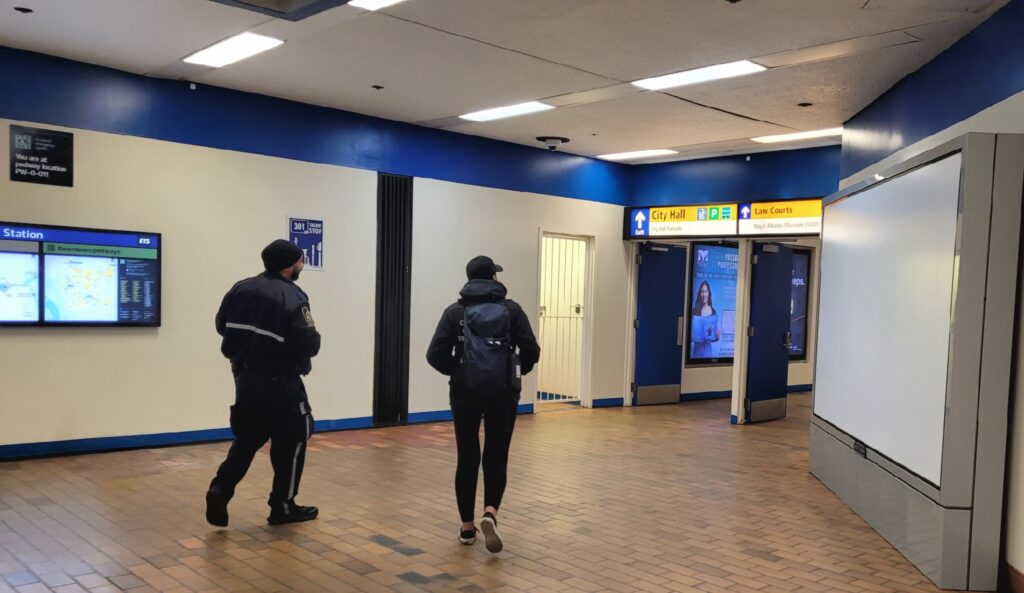
Editor’s note: the pic at the top of the post shows a member of the Community Outreach Transit Team in an LRT station.