

It’s a cold winter afternoon. Inside the storefront of an old brick building, guests are gathered around tables covered with art supplies.
This day space, known as wâwâhtêwa, is operated by Boyle Street Community Services (BSCS) and provides a safe and welcoming environment in downtown Edmonton. Coffee is poured, conversations carry across the room. In another part of the building, others are watching a movie. Staff move easily between people, checking in and offering support where needed. These are sounds and sights of warmth, routine and a place to belong.
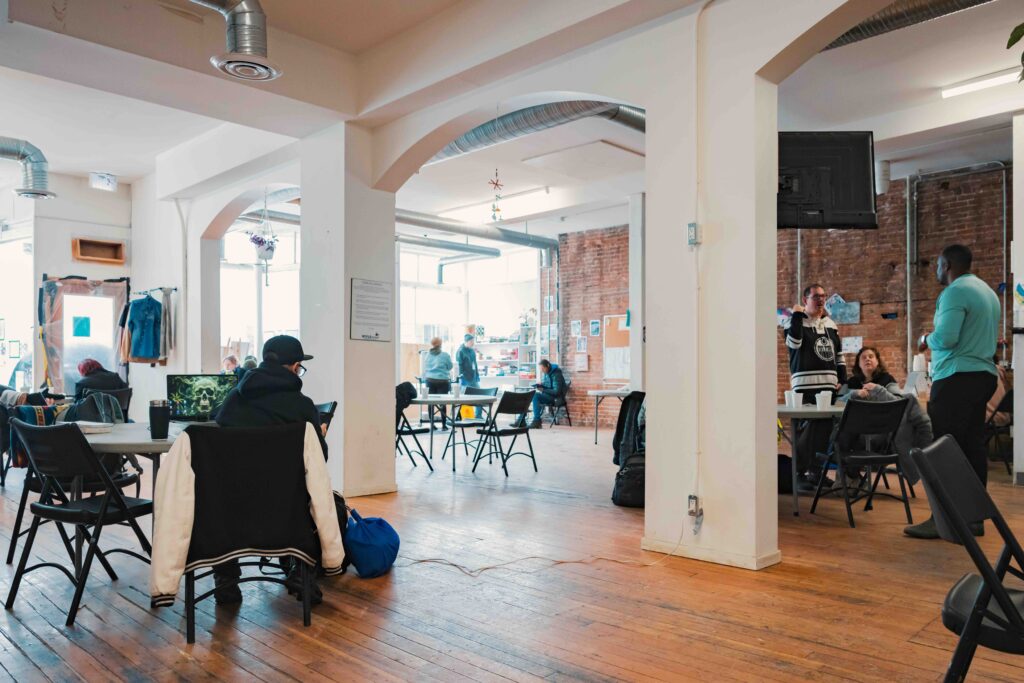
Last November, Edmonton City Council unanimously voted to direct $1 million to expand hours at four day spaces across the city over the winter. The first act of the new Council had multiple objectives: providing vulnerable Edmontonians relief from extreme weather and opportunities to connect to resources, as well as improving perceptions of safety in public spaces.
Day spaces are an integral part of Edmonton’s crisis support system for people who are experiencing homelessness or are precariously housed.
The provincial government funds 24/7 emergency shelters, the Navigation and Support Centre and funding to community organizations to provide crucial services and help individuals find pathways to housing and recovery. The City plays a supplementary role, filling gaps by supporting outreach, extra services during extreme weather, transportation, as well as longer-term investments in affordable and supportive housing.
The work of frontline social agencies is especially crucial in winter, when being outside for just a few minutes can be a matter of life and death.
For Boyle Street, the injection of additional City funding meant that they could keep the wâwâhtêwa day space open 12 hours a day, seven days a week. Between December 2025 and March 2026, those extended hours provided 3,483 visits from people seeking a safe and welcoming space to rest, connect and access support when they needed it most. During that time, staff supported 189 individuals through ongoing care, helped 107 people access housing support and connected 74 people to health and recovery services.
“It’s so important for people to have safe places to go in winter, not just for immediate relief from the cold, but because homelessness is extremely stressful,” said Caitlin Beaton, Program Manager, Homelessness Prevention with the City of Edmonton. “We want to help people move beyond survival, so they can find help to move out of homelessness.”
While emergency shelters are open 24 hours a day, day spaces offer something different. For one, they serve a broader population, offering a welcoming space for anyone whose housing is precarious. This also means that a day shelter can be a space to connect with friends or family who aren’t staying there. Nobody is required to interact with services or programs to be in the space.
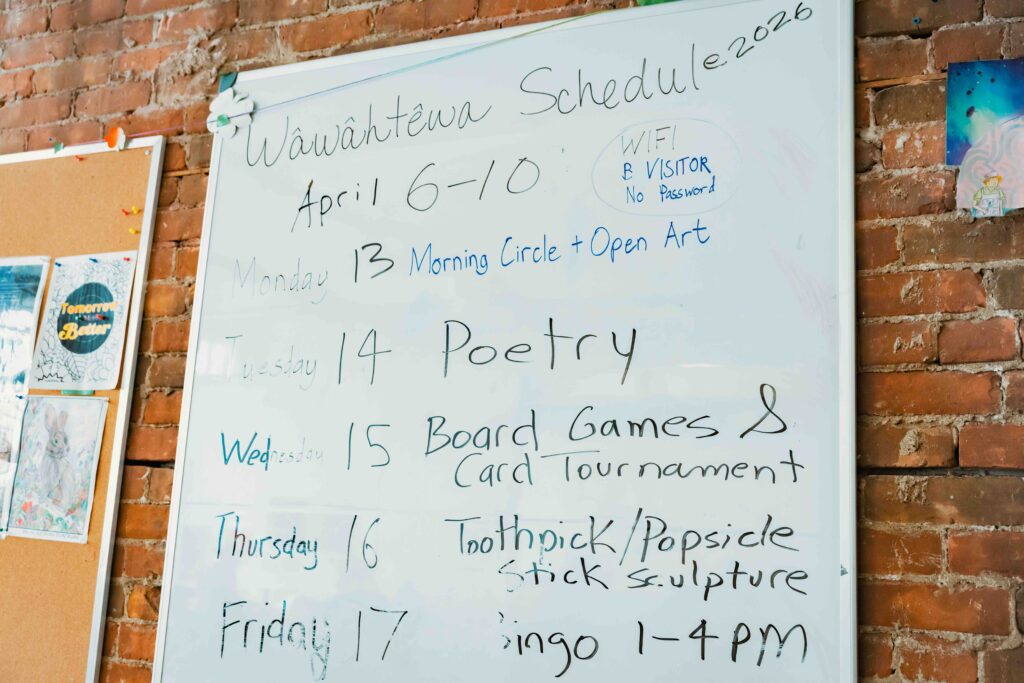
For housing and support workers, day spaces also provide a routine place to connect with unhoused clients who don’t have phones and might otherwise be moving between other public spaces like libraries and transit. . Because there’s no pressure to leave, a day space makes it easier for workers to locate clients, meaning more time to support them to get ID and an income so they can find permanent housing.
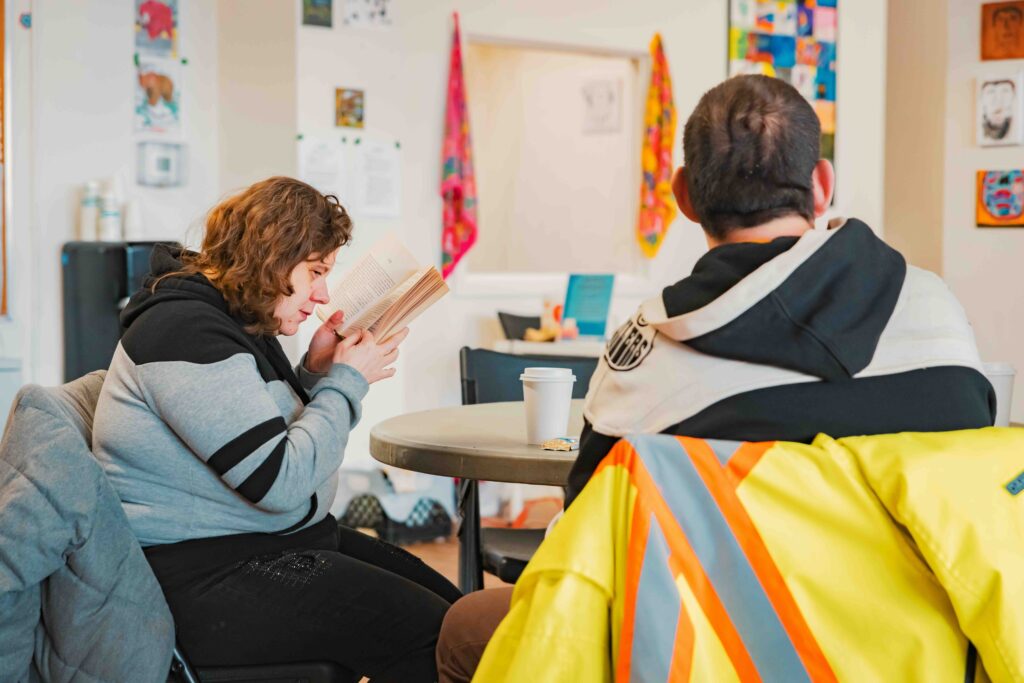
Individuals experiencing homelessness are statistically more likely to experience violence, trauma and stigmatization. Activities you might find in a day space – poetry, games, movies and art programs – are meaningful, healthy ways for Edmontonians to engage with peers and find respite from the insecurity of not having a safe home. . They can get a hot shower. Small things can help rebuild a sense of self, a pivotal step in moving towards a new life..
“It feels like home,” said one Edmontonian, who came to the shelter on a friend’s advice. He expected somewhere to pass the time, but instead found a place to join activities and spend time with others without pressure or judgment.
“I’ve been doing stuff I haven’t done in like 20, 30 years,” he said. “You leave here with a good feeling at the end of the day.”
Another guest, a former tattoo artist, said the creative programming helped reconnect him with a part of himself he had missed.
“It kind of brings the art back into my life.”
Across Edmonton, the need for housing and support remains significant. In March of this year, more than 3,700 Edmontonians had no permanent housing, according to Homeward Trust’s By Name List. Of those, around 2,290 are “provisionally accommodated,” meaning they might have access to transitional or short-term stay housing or are couch surfing.
Homelessness won’t be solved by a single government or agency alone. The City of Edmonton continues to invest in long-term solutions alongside immediate support. Since 2019, the City has leveraged a $258.4 million investment to attract more than $1.26 billion from other funding partners to create or renew 6,159 affordable housing units, including 1,038 units of supportive housing. The City’s Housing and Homelessness Services Plan lays out how the City is working alongside other orders of government and community to prevent, resolve and respond to homelessness. Because the context continues to evolve, the plan guides actions to align with long-term objectives to prevent and end homelessness.
Boyle Street’s day space can welcome a limited number of guests at one time, meaning demand often remains high. Even so, every available seat represents someone indoors, somewhere safer than the cold. For the people who come through the doors each day, warmth is only part of what they find there.
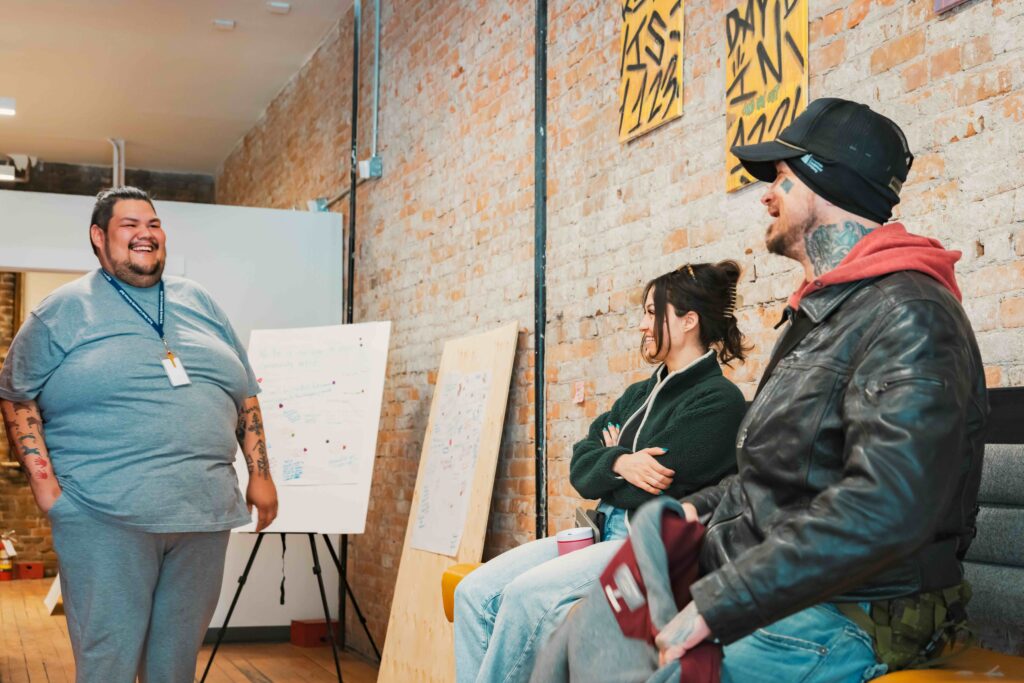
“They give you a place to express yourself and to be yourself without people judging you,” said one guest. “It kind of brings it back to making you feel like you’re human again.”
Editor’s note: the pic at the top of the post shows guest artwork displayed inside wâwâhtêwa, Boyle Street’s day space.