

Panagiotis Labiris is on a mission to keep Edmonton’s roads safe for drivers, cyclists and pedestrians.
He inspects the city’s streets, sidewalks and alleyways for damage and schedules repairs. Potholes, of course, take up a lot of his attention. The City budget is $11.7 million this year for asphalt road maintenance.
“City crews filled 537,265 potholes in 2024,” says Labiris, who is one of 10 district inspectors with the Infrastructure Maintenance team at the City of Edmonton.
Prioritize, predict and plan
To help in Edmonton’s ongoing battle, inspectors are using a new app, created by the City’s Data Science and Research team. The digital tool, known as Repair, makes it easier and more efficient to track and prioritize potholes, predict where new ones will pop up and plan repairs.
In the past, inspectors would get lists of potholes, then use a map on the wall or Google Maps to confirm the locations and plan repair routes.
“The new app populates all the information in one place, so I can just look up what I need on it,” says Labiris. “It gives us a nice visual, so I can see what the route could look like. It helps with scheduling repairs. ”
The app, launched in January 2024, also makes it easier for City staff to prioritize which potholes to fix. Those on major arterial or collector roads with more traffic are given higher priority, as are larger, deeper potholes and those in the wheel path of vehicles.
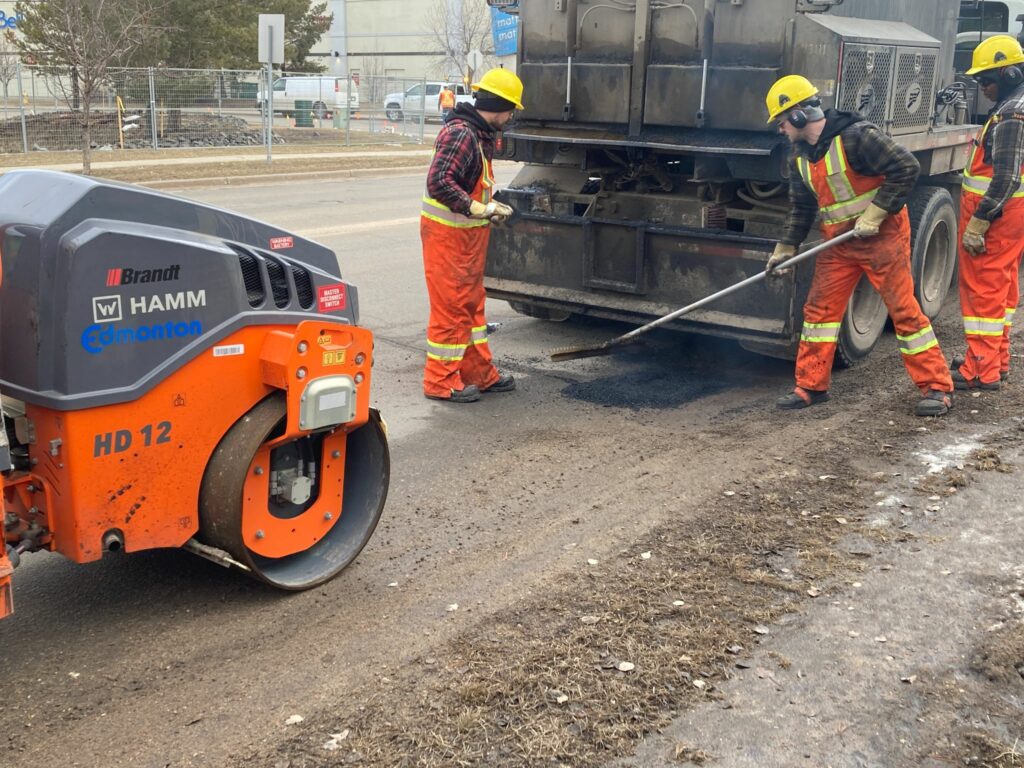
As a northern city, Edmonton is particularly vulnerable to potholes, due to its freeze-thaw cycles in winter. Water gets into cracks in the pavement, then freezes and expands. This deteriorates the pavement and when the ice thaws, it leaves holes, which can get bigger as more vehicles drive over them.
Labiris and his colleagues spend much of their time on the road, assessing Edmonton’s 12,000 kilometres of paved streets and alleys, and 500 kilometres of sidewalks. That’s a lot of distance to cover—and the city is only growing—so inspectors also rely on Edmontonians to report roadway issues to 311, by app, phone, in person or online.
In 2024, the City received 7,544 reports of potholes. Twenty per cent were duplicates. The app automatically filters out these repeats, so inspectors are no longer going out to assess the same reported pothole multiple times.
“We have more road inventory to maintain, but our budget isn’t keeping up with our growth,” says Andrea Belous, the general supervisor of the City’s Infrastructure Maintenance, Planning and Monitoring Unit.
“The app allows us to save time, not sending out people unnecessarily to do an inspection. If 20 per cent were duplicates last year, that’s a lot of savings.”
This year, 311 has received 9,772 pothole notifications and repaired 115,869 potholes as of May 4.
Limitless possibilities
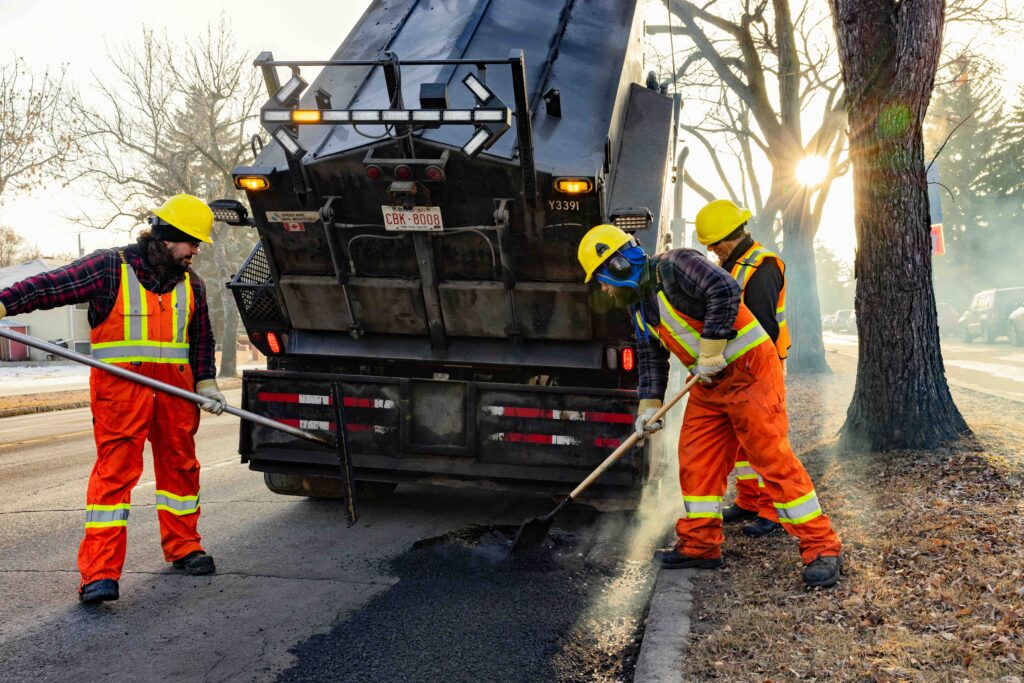
Inspectors also rely on the app to forecast future problems. The app uses artificial intelligence to predict where and when potholes might emerge based on six years’ worth of data. With this info, Labiris and his colleagues can proactively assess areas and schedule repairs before Edmontonians file a 311 report.
“For an inspector who might not be as familiar with their district, this could be a helpful tool,” he says.
The City’s Data Science and Research team created the app, led by a computer science co-op student, Dawu Liu, with the guidance of a senior data scientist. The team’s manager, Kris Andreychuk is excited by the app’s possibilities.
“We could expand it to track, prioritize and schedule repairs to sidewalks, shared-use paths, playgrounds, bridges—just as we do now with potholes, ” says Andreychuk. “The extensions that we could build on this tool are limitless.”
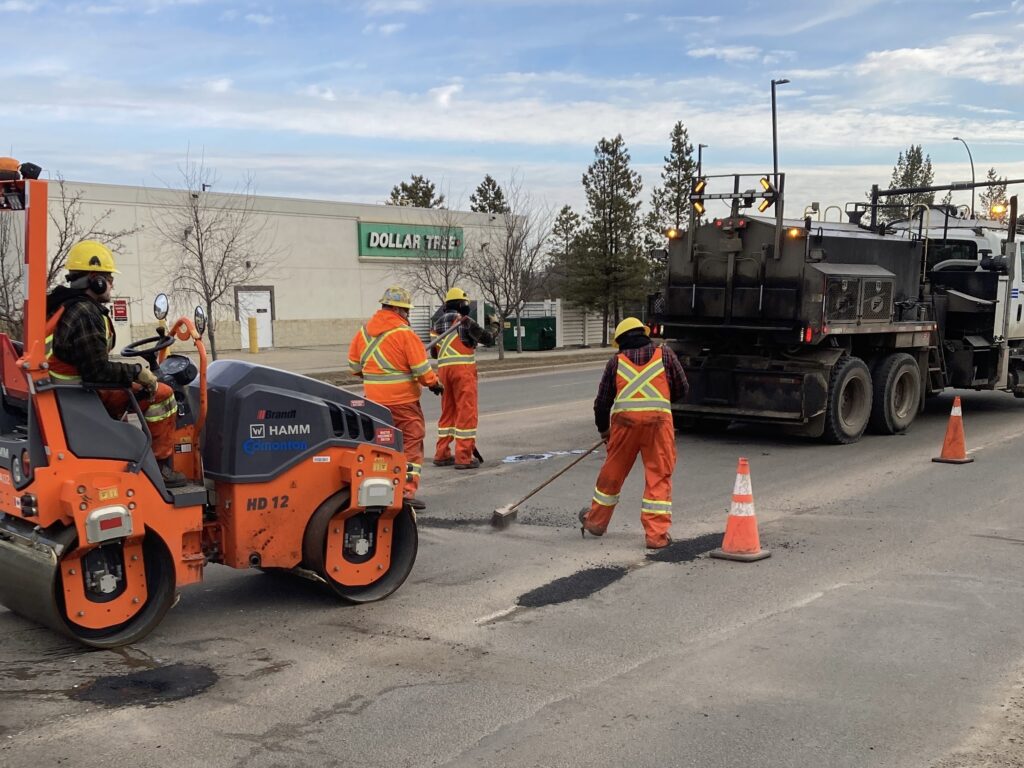
Editor’s note: the pic at the top of the post shows a City road maintenance crew repairing potholes on 85 Street and 96 Avenue in Strathearn.
Read about the Data Science and Research team and its work with artificial intelligence in helping to conserve wildlife in Edmonton.