

If you ever stroll through Queen Alexandra, you might notice a woman sitting in the charming front yard of her Multi-Unit Residential Building (MURB), enjoying her morning coffee with her tenants. That woman is Terry Tarrabain, and we had the pleasure of chatting with her about her experience moving into and transitioning her building to solar energy.
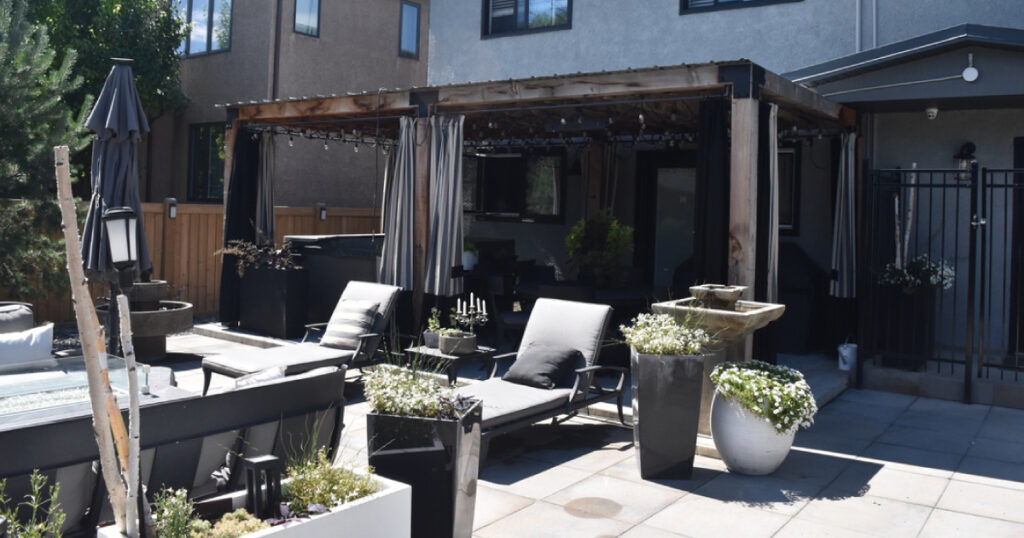
On a pleasant afternoon, Tarrabain graciously introduced us to her newly retrofitted home, inviting us to sit with her outside in the beautiful front yard where bees and birds flitted around her artistic water fountain.
“When my husband and I first purchased this property, it was nothing like this,” she said, gesturing to the upgraded features—the fresh wall paint, the new furniture, the windows and the backyard.
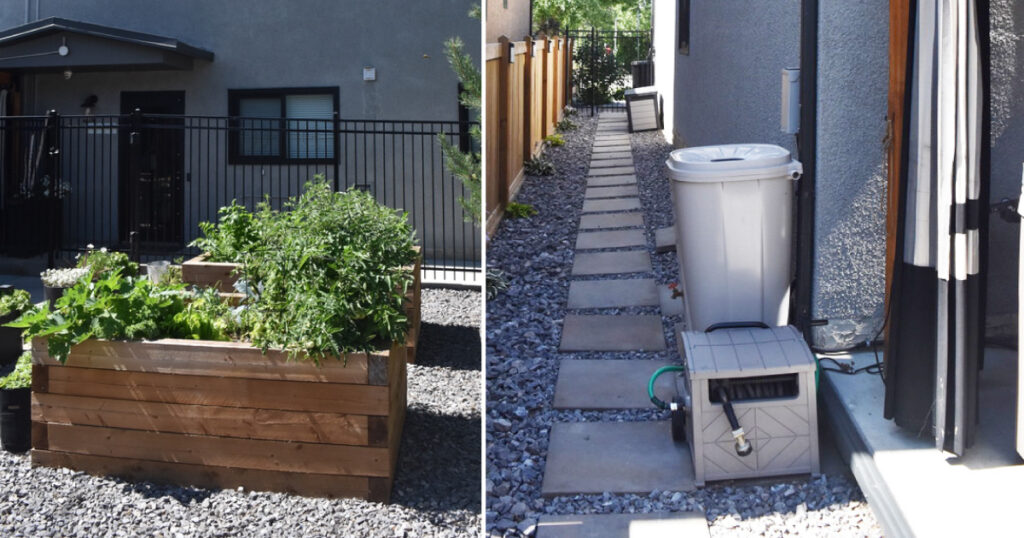
“One of our tenants loves gardening, so we set up two garden plots for her and the others,” Tarrabain explained. “And since my husband and I don’t drive much, [and] being outdoorsy people, we decided to turn our garage into a lovely space for hosting outdoor gatherings.”
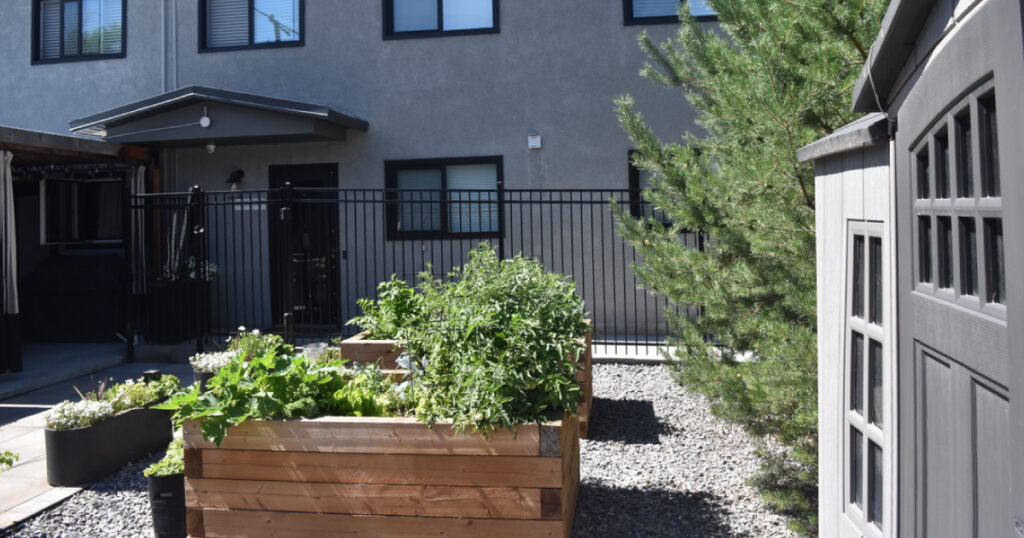
Having purchased the land from an elderly person who insisted on keeping the property as a MURB, Tarrabain said one of their biggest motivations to move into such a building was its prime location and the ability to live close to people they care about. “This place is within walking distance to everything,” she said. “I live with my husband, my children, some of our lifelong friends, and we barely have to drive for our daily needs.”
Tarrabain never considered herself an environmentalist. Her decisions were always guided by practicality and financial sense rather than a desire to save the planet. But as she embarked on her retrofitting journey, she found herself exploring options that, surprisingly, aligned with a greener lifestyle.
It all started when Tarrabain began considering the possibility of switching to solar. At first, the idea of installing solar panels seemed like an expensive and unnecessary investment. But when she realized she could recoup a significant portion of the cost through rebates from the City of Edmonton’s Solar Rebate Program, the numbers began to make sense. “Without the solar rebate program, I would have thought twice about this decision,” Tarrabain admitted. “It is a big decision to make.”
The process was straightforward. Tarrabain had the panels installed on the roof of her building; it was a smooth transition with no resistance from the tenants. In fact, they were enthusiastic about the idea, especially when she explained that their utilities would now be included in the rent. For them, it was a win-win situation—no more fluctuating utility bills, and they were contributing to a more sustainable living environment without any extra effort.
Tarrabain didn’t make these changes out of a deep concern for the environment, but she couldn’t help noticing the positive impact her choices were having. The building’s energy consumption dropped significantly, and the tenants were thrilled with the consistent utility costs. Even the water fountains she had installed as part of the building’s retrofitting—originally intended to enhance the property’s appeal—were becoming small havens for animals seeking water on hot, sunny days, contributing to the local ecosystem.
These recent changes gave Tarrabain a sense of accomplishment, and it wasn’t long before she started contemplating her next move: investing in an electric vehicle (EV).
“I’m doing this as a long-term investment,” she reflected. “My children will be around to benefit from the investments I’m making today. It’s not just about the immediate return—it’s about what these changes will mean in the years to come.”
As Tarrabain mulled over the decision, her motivations were evolving. While still heavily driven by the financial incentives, she was increasingly aware of the legacy she was building—not just for herself, but for her children and the community around her.
Whether or not the environment was at the top of her list of values, Tarrabain saw the undeniable logic in making greener choices. The solar panels, the energy-efficient retrofitting, and now the potential EV purchase—they all made financial sense, but they also contributed to a more convenient and sustainable future.
Tarrabain had stumbled into the world of eco-friendly living not by passion, but by pragmatism. And in a world where resources are finite and costs are rising, it seemed only rational to switch to greener energy.
The solar rebate for MURBs opened July 2 and runs until December.
Editor’s note: the pic at the top of the post shows Terry Tarrabain’s multi-unit residential building (MURB).