

Every building, every place, every structure has a story and for over 40 years the City’s heritage planners have been working with Edmontonians to preserve those stories. Through the Heritage Resources Reserve Fund, property owners are eligible for matching grants of up to $100,000 for homes and up to $500,000 for commercial or industrial buildings for exterior renovations.
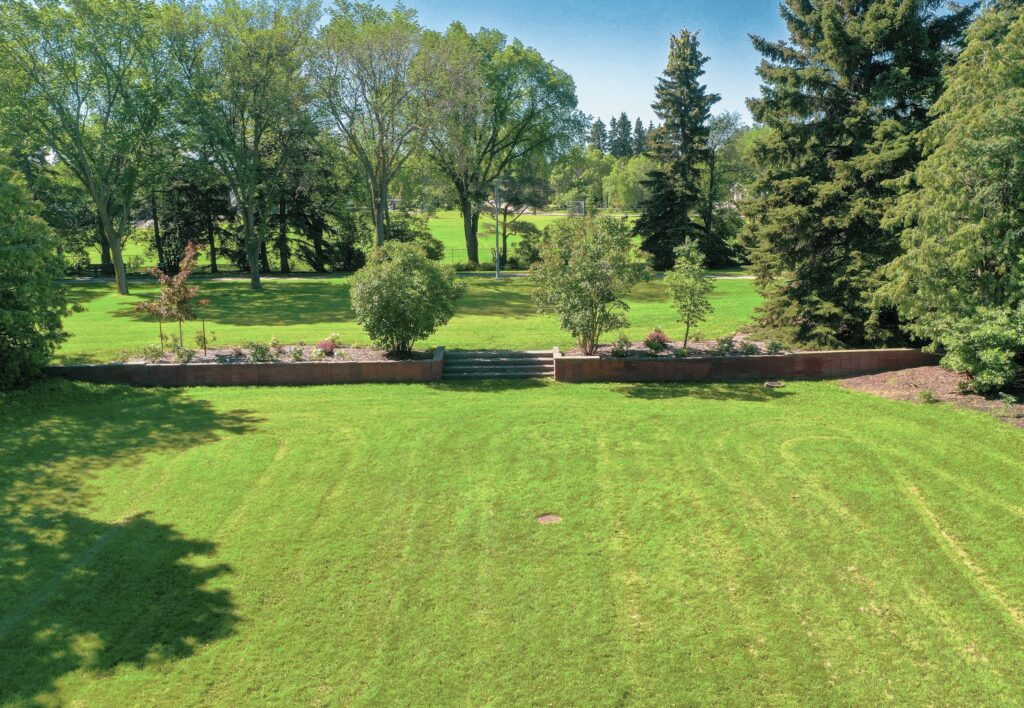
On May 19, City Council voted to designate the 200th historic place in Edmonton as a Municipal Historic Resource: Windsor Park North Park, located at 8905 Windsor Road NW. Edmonton is the first city in Alberta to achieve this milestone.
Behind these places are the people who buy and love their heritage buildings and decide to take the important step of seeking a historic designation.
The Field Log House
When Anna Curtis and Bruce Anderson moved to Edmonton in 2002, they were looking for a specific kind of house — modern with all the amenities. What they found instead was the Field Log House in the Bellevue neighbourhood. The charming two-bedroom 1934 home is built entirely out of logs and still outfitted with the original light fixtures, flooring, kitchen and fireplace.
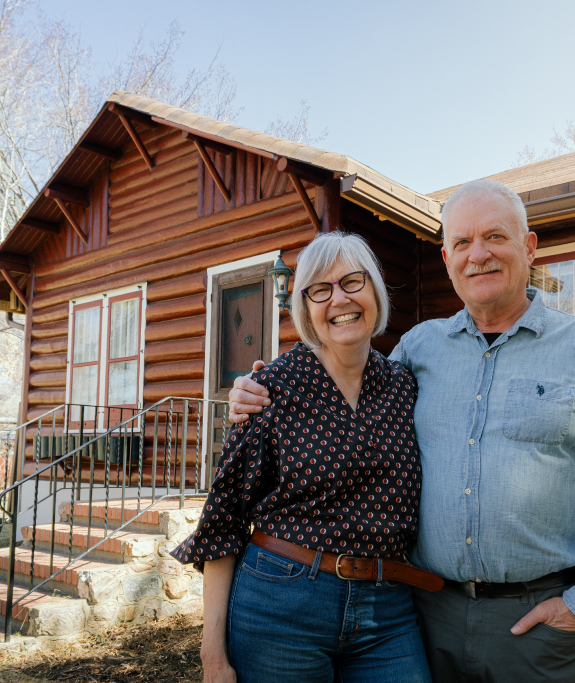
The house was the opposite of what they set out to purchase. But when Curtis and Anderson first stepped through its doors, they knew it was the right place for their family.
The Field Log House’s sellers also knew the couple and their family were perfect for the historic home.
“Peggy (Field) saw us coming through the front gate with our two girls, who were little at the time, and she said, ‘Those are the people who are going to buy this house… Grandma and Grandpa sent them.’”
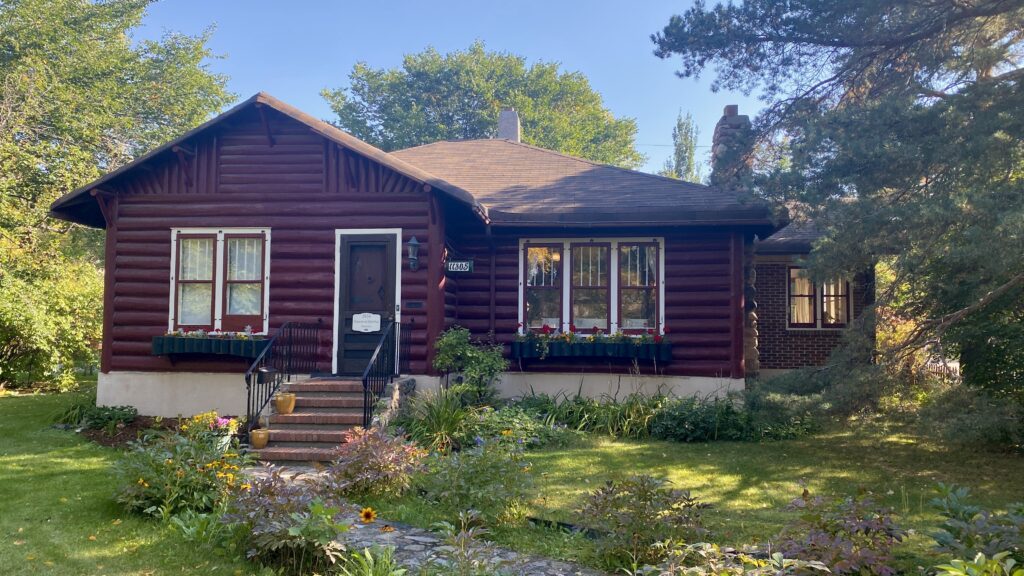
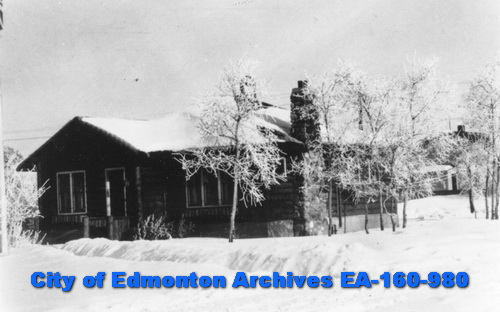
Grandma and Grandpa were Alfred and Marguerite Field who had the house built in 1934 after seeing log cabins during their honeymoon in the Rocky Mountains. While Stuart Olson (the founder of today’s Stuart Olson Construction) constructed the home, Alfred, an entrepreneur and man of many skills, customized the interior. He also built two other homes on the same block as an investment.
The Field Log House was designated a historic resource in 2024. Curtis and Anderson, the current owners, had already done some work on the structure, but a Heritage Resources Reserve Fund grant from the City allowed them to extensively restore much of the exterior, including repairing rotting logs, stabilizing the fieldstone fireplace, and replacing the parging (mortar) on the above ground portion of the basement.
Curtis says she and Anderson had some concerns about designating the home as a heritage resource since it meant it could never be torn down. Would that make it hard to sell when the time came?
“I called a realtor who specializes in the area, and she said, ‘Let me ask you something: why did you buy the house?’ and I said because we loved it. She told me, ‘That’s why someone else will buy it. The designation is not going to scare them off.’”
The John J. Lang Apartments
Finding an office building with a homey feel was the dream of the owners of The Little Village Wellness Centre. The group of psychologists wanted an office that would look like a home tucked into a neighbourhood. They found it in the 1907 John J. Lang Apartments building, which was once a boarding house for nurses working at the nearby General Hospital in Wîhkwêntôwin.
The Little Village team saw beyond the dilapidated condition of the building to realize their dream of a welcoming place for their patients and the neighbourhood.
“I think, even though it was falling apart, when we got in, it felt warm,” says team member Wence Leung. “It felt like home.”
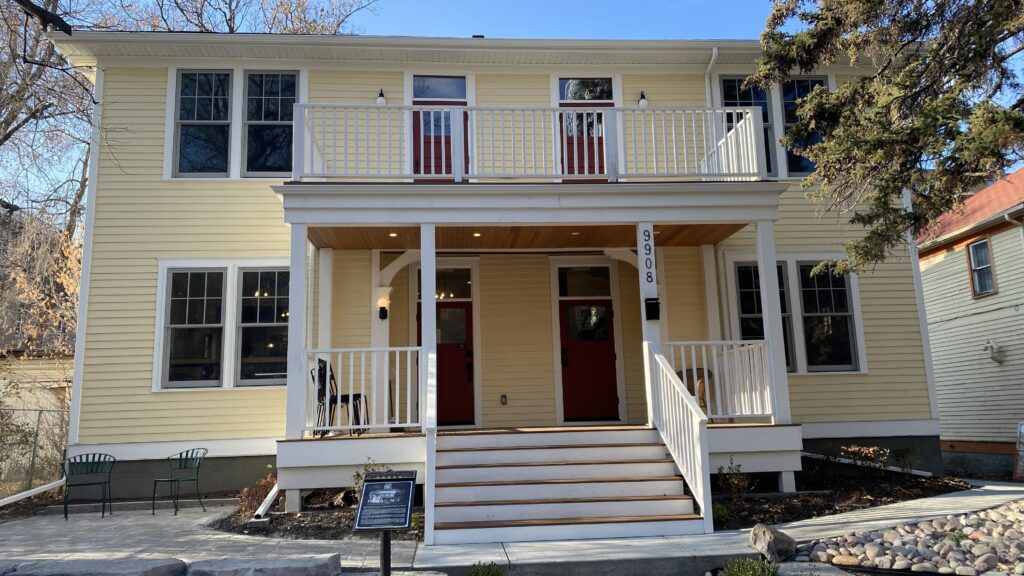
“We had a vision of making it into more of a community,” said Filippina Martinovich, another member of the Little Village team. “Mental health is really important right now, and bringing children, families, and adolescents together in a more cozy environment is something that we felt would be a good fit.”
The group worked closely with the City’s heritage planners to receive funding for exterior renovations. By pitching in to do some of the finishing work themselves, the Little Village team were able to move into the building in under two years.
“The city was very cooperative,” said Tony Rizzuto, another team member. “We dealt with some really good people; just very pragmatic and very easy to work with. I think the City did a really good job in terms of engaging us and kind of walking us through the process because we had never done anything like this before.”
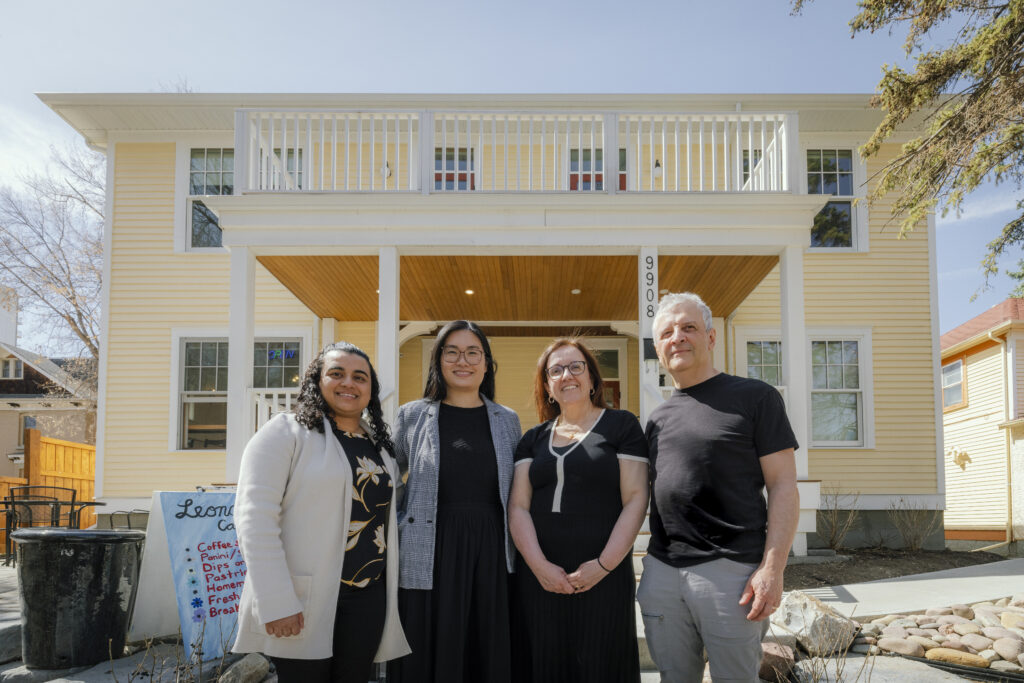
The building is now everything the Little Village team imagined. It contains a cafe on one side of the main floor with a massage therapist and acupuncturist on the other. Above that are eight offices where mental health counselling is offered to young people and families.
The Historic Resources Program
David Johnston is one of the City’s principal heritage planners. He says that although the Historic Resources Program has been in operation for over 40 years, the majority of designations happened after City Council provided a dependable reserve fund. This allowed the unit to increase the number of designations and provide more financial support to homeowners.
“With a reserve we’re much more confident and able to tell people that if you apply to designate you can be pretty confident you’re going to get your funding so that gets people in the door,” says Johnston. “Prior to the reserve, that would have been a whole different conversation.”
The process of historic designation and the rejuvenation of historic buildings has a significant economic impact on Edmonton.
“Not only does this program provide a big boost to the local economy from a City perspective of us getting involved in the economy directly, it sees a tremendous investment in properties and employment for local contractors. You can’t even calculate what that’s contributed to the local economy.”
Learn more about the heritage program and the buildings the City has helped preserve:
Editor’s note: the pic at the top of the post shows the Fairmont Hotel Macdonald. It was the first historic designation in Edmonton.