

We’ve experienced a lot of changes over the past seven years.
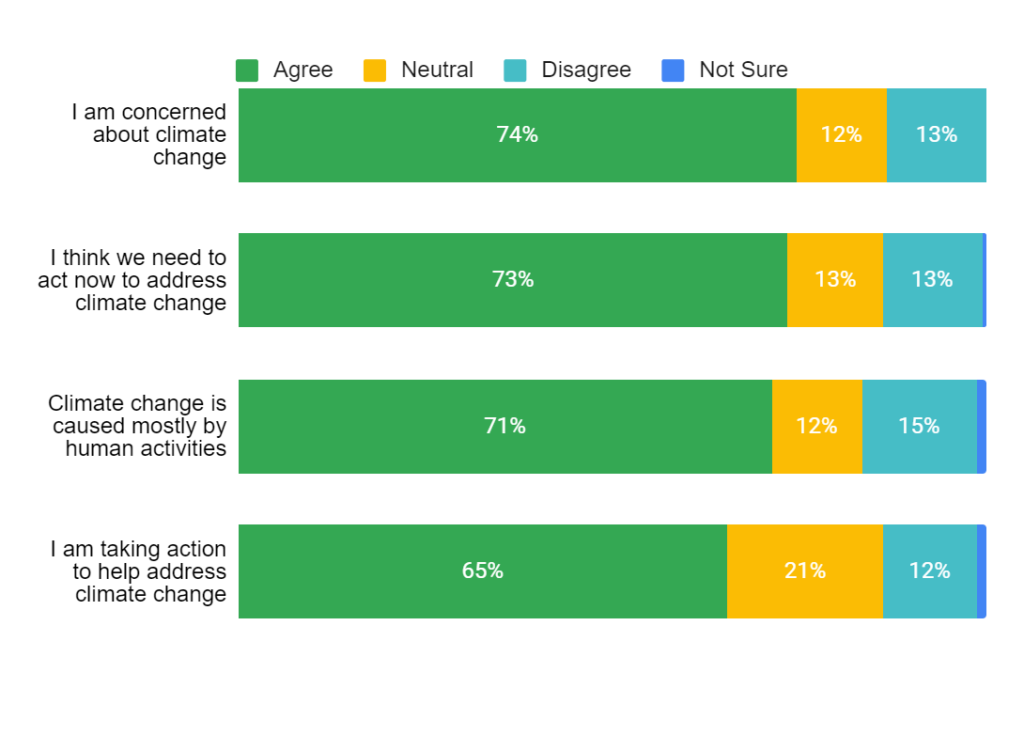
One thing that hasn’t: Edmontonians are concerned about climate change. Their sentiments have remained consistent and resolute since 2016, according to the annual Climate and Energy Perceptions Survey. It was conducted by Narrative Research from June to July 2023. This general population panel survey had a sample of 1,004 Edmontonians.
More than 70 per cent of them agreed with the first three statements about the concern for climate change, its cause and the need for action:
Economy
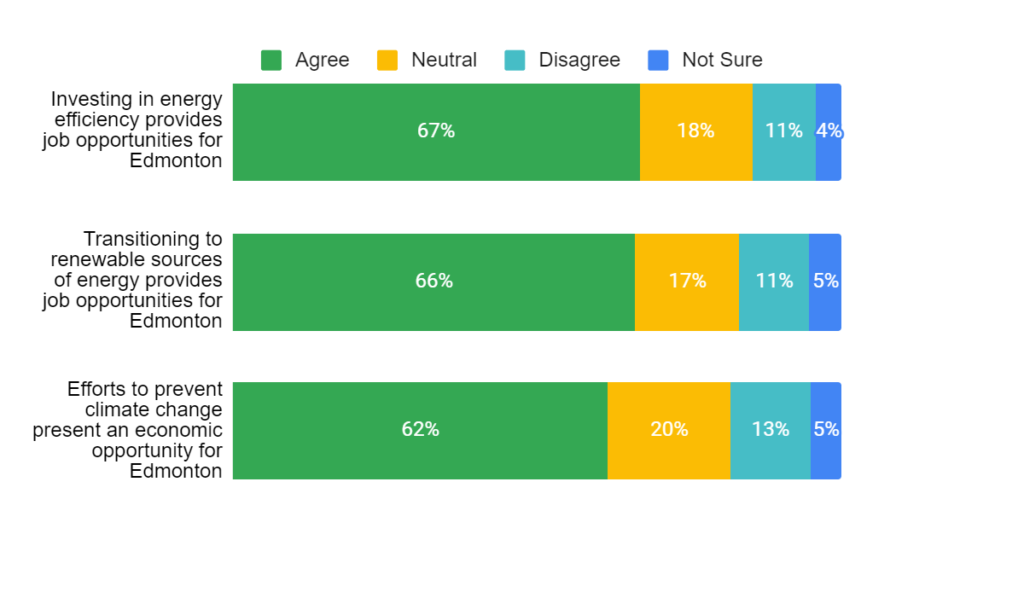
Edmontonians also continue to recognize the economic opportunities associated with climate change, such as investing in energy efficiency or transitioning to renewable sources of energy.
More than 60 per cent of Edmontonians agreed with these three statements:
Actions of individuals
Edmontonians are aware of how their choices influence climate change. According to the survey:
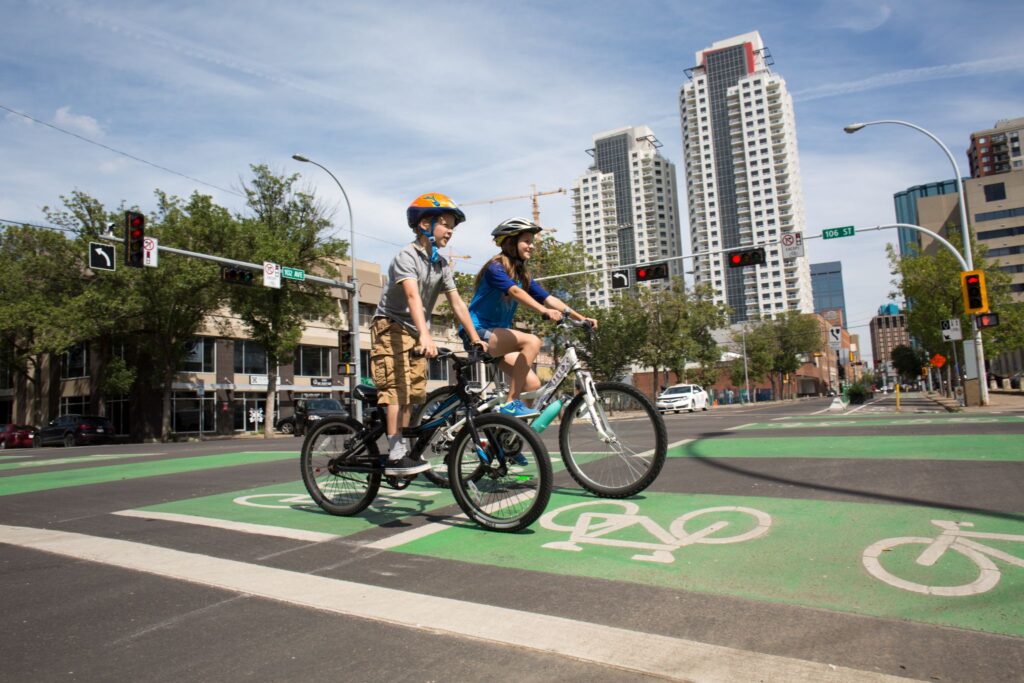
• 77 per cent acknowledge that walking, cycling or public transit reduces the impact on climate change
• 56 per cent have proactively made energy efficiency improvements to their home—an eight per cent increase from 2022.
• 79 per cent say energy costs serve as a strong motivator for conservation.
• 55 per cent occasionally express concerns about having sufficient funds to cover their energy bills.
Regarding renewable energy, a newly introduced metric this year indicates that 74 per cent agree that having solar panels on one’s home is more environmentally beneficial than other energy sources.
Edmontonians also acknowledge the benefits of electric vehicles, with 26 per cent now considering the switch to electric for their next vehicle. Notably, awareness of public charging stations has increased to 69 per cent— reflecting a 12 per cent rise since 2022 and a substantial 21 per cent increase since 2021.
Climate resilience
New in this year’s survey are perspectives on climate resilience, where 26 per cent claim to be familiar with the term, associating it with adapting to or mitigating environmental changes due to climate change.
The relationship between climate change and extreme weather events is acknowledged with 74 per cent in agreement that climate change is affecting Edmonton’s weather, and climate change negatively impacts the health and well-being of individuals.
Actions of the City
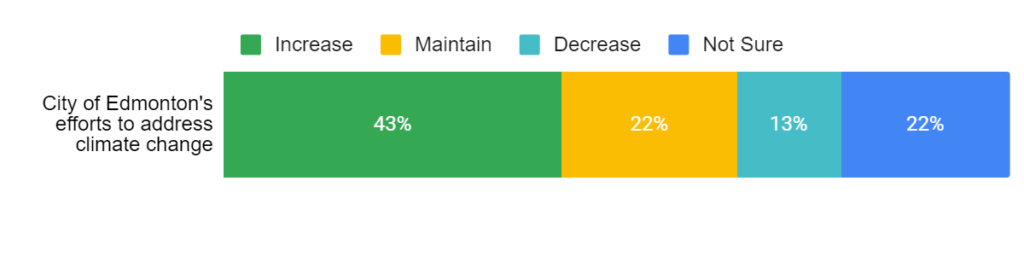
Edmonton’s residents continue to see a role for the municipality in climate action, with 43 per cent urging an increase and 22 per cent advocating for the maintenance of current efforts by the City.
Since City Council declared a climate emergency in 2019, Edmonton has been actively working to address urgent environmental challenges. The City has implemented a range of initiatives aimed at minimizing the ecological footprint of daily life.
Edmonton’s waste services are committed to sustainable waste management practices, ensuring the proper collection of waste for recycling, reuse or environmentally conscious disposal. Moreover, the City provides residents with information for individual climate action, encouraging actions that span from tree planting to adopting energy-efficient practices like upgrading home insulation to installing solar technology.
The Corporate Climate Leaders Program stands as a significant initiative supporting both profit and non-profit corporations across the city. This program facilitates the implementation of greenhouse gas reduction plans, fostering a collective commitment to lasting change.
The Building Energy Benchmarking Program invites commercial, institutional, industrial, and multi-family buildings to submit energy performance data for benchmarking and disclosure, setting a precedent in municipal engagement across Canada.
Root for Trees mobilizes individual, family, corporate and community volunteers to contribute to the expansion of Edmonton’s urban forest by planting trees, shrubs and wildflowers.
Looking ahead, the Clean Energy Improvement Program (CEIP), which is aiming for a full-scale launch in 2024, is set to alleviate the financial burden of energy efficiency and renewable energy upgrades for residential and commercial properties.
Edmonton’s Single-use Item Reduction Bylaw, which came into effect July 1, 2023, is a tangible step in the reduction of waste by targeting items, such as plastic cups, that can be easily replaced with reusable alternatives.
Editor’s note: the pic at the post shows the sun setting behind the High Level Bridge.