

We recently had a minor disaster at the City of Edmonton Archives. Not a fires raging, flood waters rising kind of disaster, but a significant one nonetheless.
Before I go further, I should say that our disaster plan kicked into effect the moment we learned of it and, with the help of an archivist and conservator from the Archives Society of Alberta, we saved the affected records. No information has been lost! We still have some recovery to do, but the danger has passed.
At some point, an exposed pipe started leaking water in one of our vaults. It dripped directly down a shelving unit and onto 100 year old records which absorbed it like sponges. There was no telltale watermark on the ceiling, or puddle on the floor. We monitor temperature and humidity daily, but there wasn’t a telltale spike to show anything was out of the ordinary. We have rolling shelves to maximize floor space and this particular stack was closed so there was no visual clue that anything was happening. Mould can start growing after 2 days so we can’t tell exactly when it started. By the time it was discovered several metres of records were soaked, others were damp and there was significant mould growth. All in all about 40 boxes were involved.


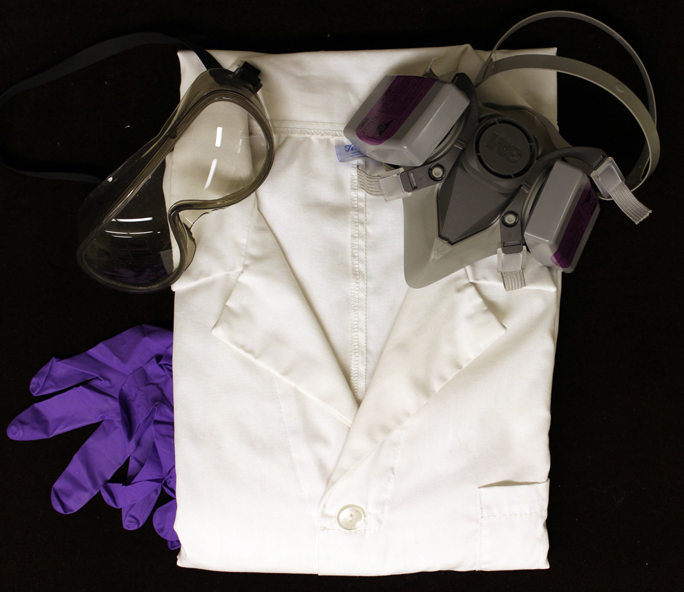
City of Edmonton archivists Tim O’Grady, Paula Aurini-Onderwater and I, along with Amanda Oliver and Jayme Vallieres from the Archives Society of Alberta (ASA), worked to stabilize the records. First, everything was bagged in plastic to contain the mould. Health damage from mould is cumulative so it’s very important to minimize exposure. We all wore masks and protective clothing.
The next step was drying the material by removing it from the folders (which were thrown away) and layering it in blotting paper. It’s really important to maintain intellectual control, we labelled everything and kept a spreadsheet as we worked; identifying which boxes and folders the material came from. We are still in the drying phase but it’s almost complete. Next we’ll be cleaning up the mould and we’re hiring additional conservators to help us with this step. Then we will re-folder and re-box the material and it will be available to the public again.
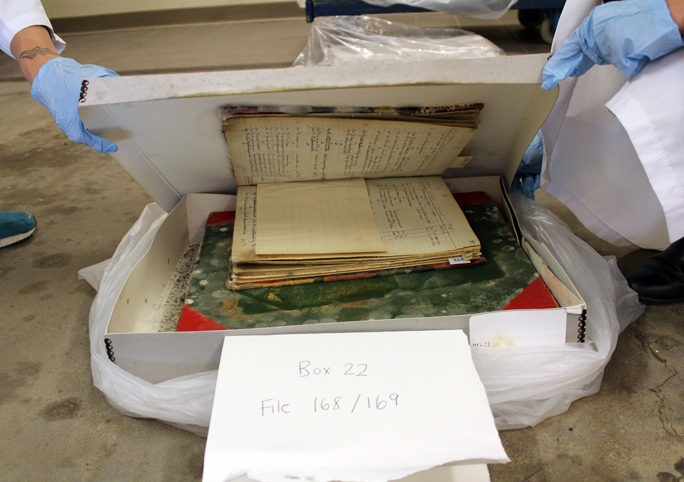
Fortunately, most of the mould was in the boxes and file folders and the archival documents within them show minimal damage. However, the brunt of the water went onto, and into, bound ledgers. Sadly, the bindings (the outer shells) could not be saved in many cases. We were forced to cut out the textblock and, because they were so saturated, interleave the pages with blotting paper. I try to look at it as a loss of aesthetics – the pretty packaging may have been lost, but the information within the ledger is still there.
I’m so grateful to Amanda and Jayme of the ASA for their help. They are part of the Flood Advisory Programme funded by the Province after the 2013 floods. The Programme first helped archives that were involved in the 2013 flooding. Now they’re advising Alberta archives on how to be prepared by minimizing risk, having basic knowledge of recovery methods, and having current disaster and recovery plans. Disaster preparedness is so important. I wish the flood hadn’t happened but I’m comforted that we had a plan in place so we were able to move as soon as we discovered the damage.