

Mary Burlie dedicated much of her life to helping people facing poverty, domestic violence and discrimination in Edmonton.
Thirty years after her passing, her legacy lives on—through the Black Angel Society and a City park on 97 Street named in her honour.
“When she talked to you, you had a sense of being loved,” says Stephanie Burlie, Mary’s daughter. “She would always refer to you as ‘baby.’ It took all of the stress and worries away; you felt safe. I think from those interactions people began to call her the Black Angel.”
Mary immigrated from Sacramento, California to Edmonton in 1969 with her husband and six children. Settling in the inner-city neighbourhood of McCauley, she did not retreat into the comforts of her home.
“She wanted to give back to the community,” says Stephanie. “She recognized the struggles of Indigenous Peoples here and wanted to do something for them.”
From volunteer to outreach worker
Even with a house full of children and limited financial resources, Mary’s commitment to give back to the community did not waver. She went to Boyle Street Co-op hoping to find some volunteer work.
The Co-op, now known as Boyle Street Community Services, supports individuals and families who are experiencing homelessness and poverty in Edmonton. The non-profit organization was established in 1971.
“When she went there, there was a fight that had broken out and she had worked her way past it,into the front door,” Stephanie reminisces. Mary asked the receptionist if they needed help and that she would like to volunteer. “Is there someone I can speak to?” said Mary. The receptionist fetched Alice Hanson, the then-Executive Director of Boyle Street Co-op.
“Alice spoke with my mother and she told my mother that they would love the help but they do not have funding to hire,” says Stephanie.
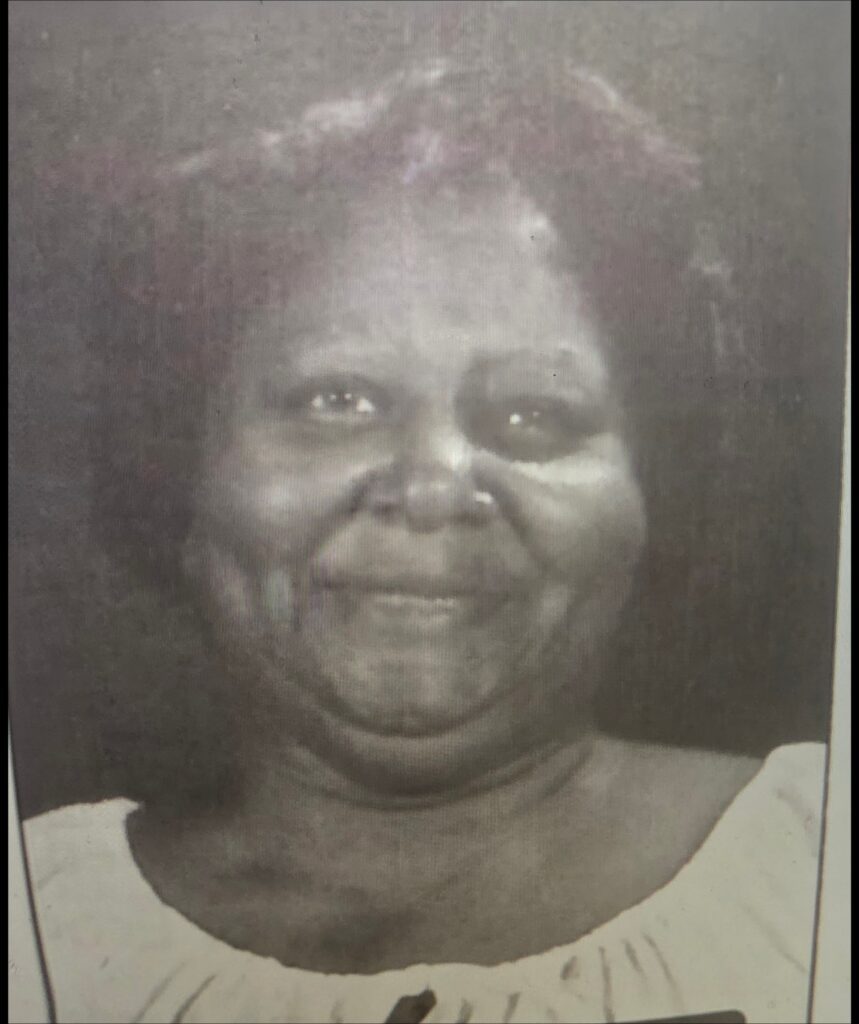
Mary started volunteering at Boyle Street Co-op and was eventually hired as an outreach worker. She worked there for 26 years until her death in 1996.
Her kindness extended beyond Boyle Street Co-op. Stephanie remembers her mom would often invite people that had nowhere else to go to the Burlie home.
“We would share our table with them,” says Stephanie. “My parents would allow them to take a shower and stay in the backyard for a day or two.”
John Burlie, Mary’s husband, shared her compassion to care for underserved communities. The couple helped a hitchhiker from the U.S. get back home. They often invited unhoused individuals into their home for supper, shelter or to tent in their backyard. Mary helped multiple women reunite with their children.
In 2021, the City of Edmonton proclaimed July 13 as Mary Burlie Day during a ceremony at MacEwan University. “We felt like the ball had been passed to us and we thought about what we were going to do with our mother’s legacy,” says Stephanie.
Soon after, the Burlies founded the Black Angel Society. It was inspired by Mary, as well as the experience of losing one of their younger family members to fentanyl poisoning.
Black Angel Society provides semi-independent housing initiatives and other supports to marginalized communities. The Leonardo Champ Foundation, an extension of Black Angel Society, offers education and outreach programs to children in care who have lost parental figures.
Honouring legacy through the Mary Burlie Park Renewal project
Mary’s legacy also lives on in a park that bears her name on 97 Street. In May 2024, the City of Edmonton began planning and design to renew Mary Burlie Park. The updated design aims to enhance the current park, improve safety measures and transform it into a vibrant community space in downtown Edmonton.
The project team looked for ways to honour Mary and her impact on the city. As a nod to the knee socks she so often wore, the park will include two landscaped areas in the shape of socks.
The park will also feature a water station positioned next to a kitchen window-style structure. Mary’s Window will offer all Edmontonians somewhere to get a clean drink or refill a water bottle.
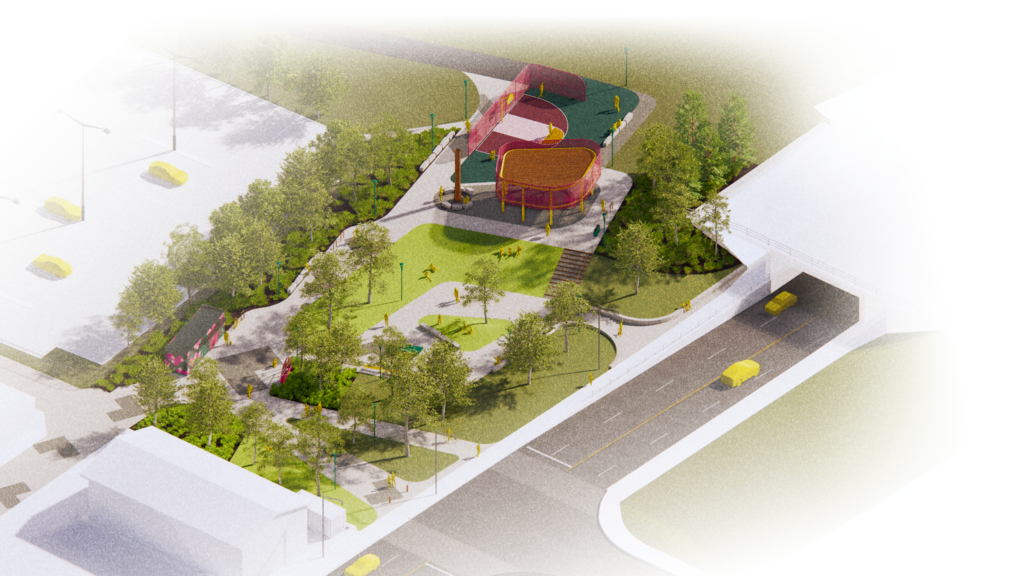
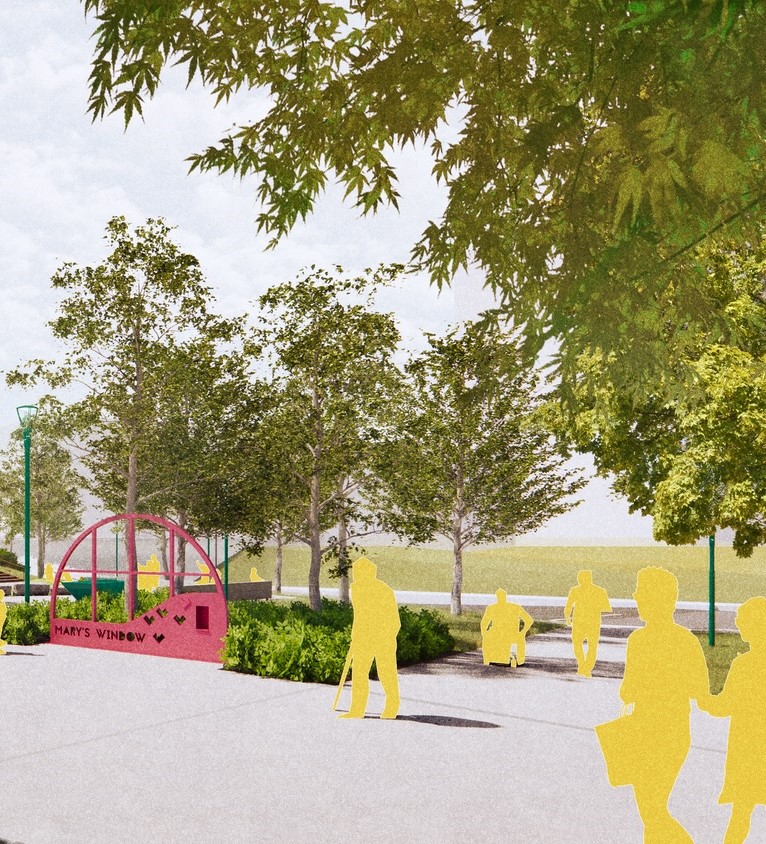
“We felt heard when we found out that the sock and the window were being put into the park because they mean so much to us,” says Stephanie.
“We lived in an old Victorian house off of Jasper Avenue for about 10 years. And I remember oftentimes I’d get up in the morning and go downstairs and I would see my mother sitting and looking out the window. She had a pleasant look on her face almost as if she was daydreaming.”
For the Burlies, Mary’s Window represents hope and to dream beyond one’s circumstances.
A legacy of integrity
Mary made people feel seen and made them feel at home. Her light shone on people who needed it the most. And through the Black Angel Society, the Burlie family continues to honour the spirit Mary strongly embodied: giving back to the community.
Editor’s note: the pic at the top of the post shows Mary Burlie, centre, surrounded by her children (from left): Felesia (Otis) Burlie, Katherine (Sanders) Burlie, Johnathan David Burlie (seated), Stephanie Burlie and Toni Burlie. Photo courtesy of Stephanie Burlie.