

Renewable is a series about visionaries, creators, community leaders and above all else, Edmontonians, each with a unique vision of a sustainable future in the heart of Canada’s fossil fuel industry.
What if there were no trees?
In Edmonton specifically, what if someone snapped their fingers, and from one edge of the ring road to the other, every tree suddenly vanished? Aside from some very confused birds and a bunch of tire swings and tree houses that would suddenly be crumpled up in the dirt, what exactly would happen to our city without our urban forest?
We sat down with Dustin Bajer, a tree researcher and archivist, for this final episode of Renewable. Dustin is a bottomless well of what he calls “tree facts,” little tidbits that feed into larger histories of trees. He’s a champion of heritage trees, the kind that tell stories about the places where they grew and the people who planted them.
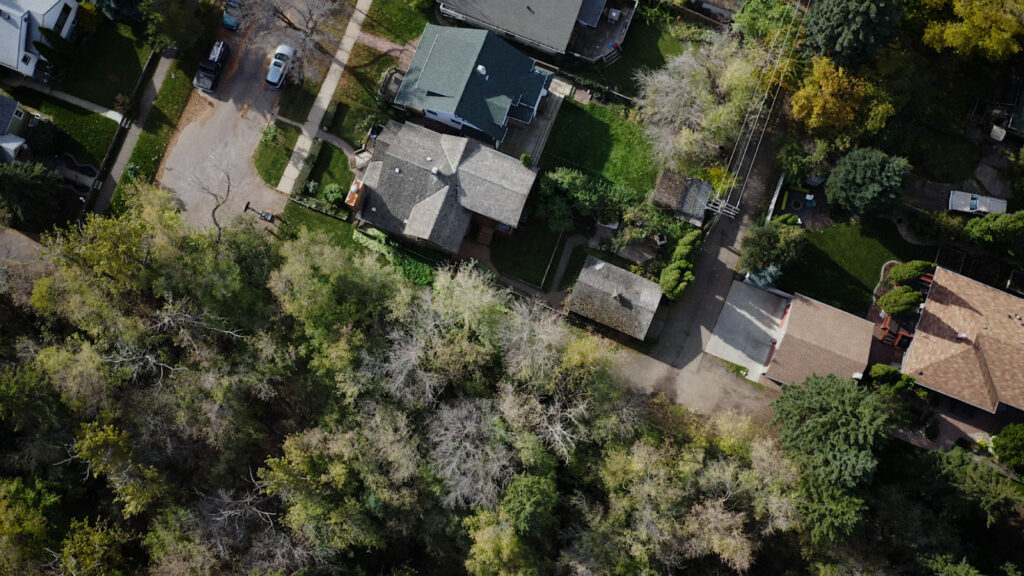
We also spoke at length about the impact an urban canopy has on the livability of a city as we grapple with the effects of climate change. While bits and pieces of that conversation made it into the episode, there was a lot we had to leave on the cutting room floor. We wanted to dig into that question a bit further here.
The first thing we would notice, if there were no trees in Edmonton, is that the city would literally feel different.
“Trees are mostly water, and that water has to go somewhere. It transpires through the leaves and changes the humidity and the environment around those trees,” Dustin explained to us. During the summer, the overall effect of urban trees is to cool the environment, providing shade to prevent sunlight from reaching buildings that then need to be cooled.
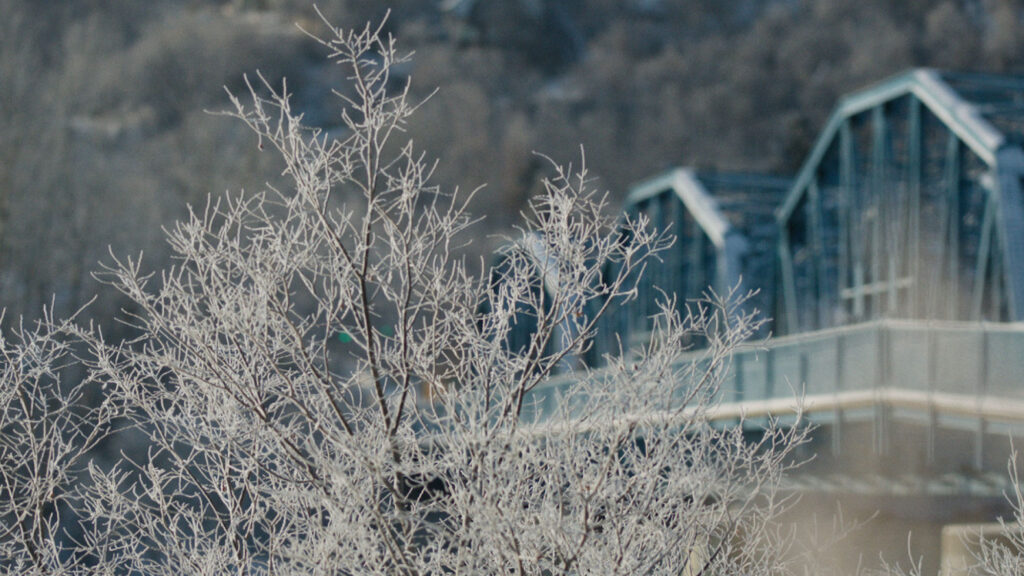
And as he mentioned in the video, trees also act as heat sinks that effectively remove heat through a process called evapotranspiration. In effect, trees sweat when the sunlight evaporates the water trapped inside of leaves. By removing the heat trapped inside the tree, there’s less energy that can radiate out into the air as heat.
During the other 10 months of the year when Edmonton isn’t concerned with sweltering weather, we would find that an Edmonton without trees is also a lot colder. Trees block winter winds, so a lack of them brings down temperatures and increases heating costs. We would be hotter during the summer, colder (and windier) during the winter, and paying more on heating and cooling year round.
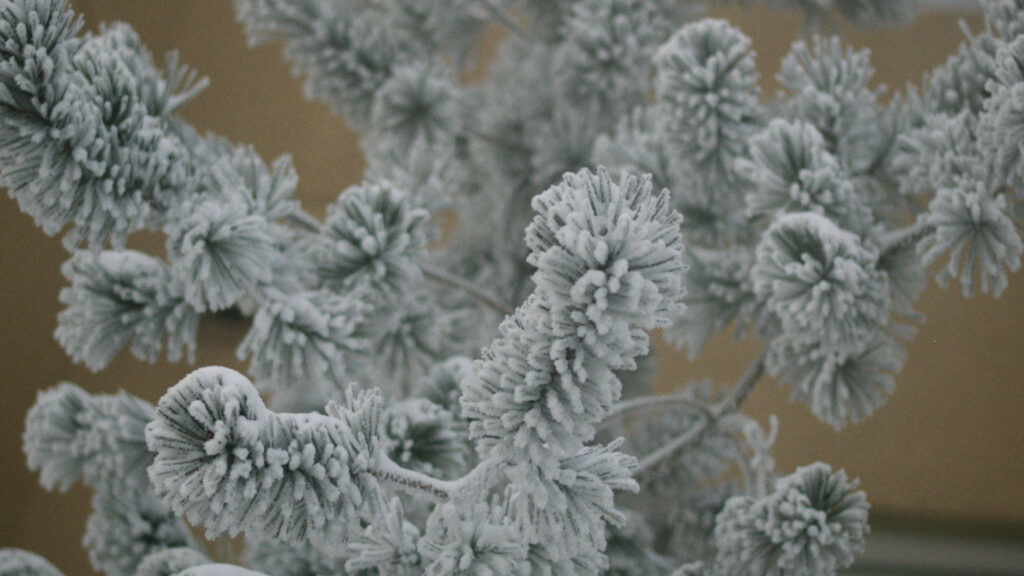
And contributing to both of these issues, there’s the issue of carbon. An Edmonton without trees would be an Edmonton where we’re not only producing more carbon dioxide to heat and cool our buildings, but where the CO2 we are creating is going straight into the atmosphere instead of feeding our urban forest. Dustin explained that while “it’s not a solution to climate change, you can mitigate many of those challenges by having a healthy urban forest.” We need trees to help keep our emissions low and we need them to capture what we do emit.
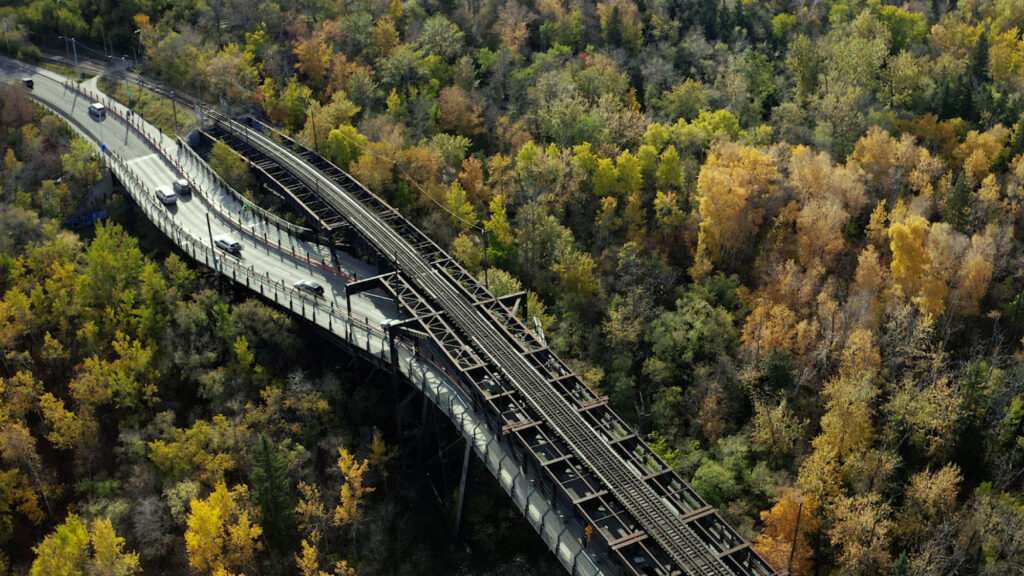
And finally we come to the river valley. Throughout the process of making these three seasons of Renewable, we’ve often arrived at this same moral to radically different stories; that for all the data-driven, rational reasons that the sustainable choice is better, it often comes down to what makes people happy. An Edmonton without trees would be a city with a chasm cutting down the middle of it. A void where something really beautiful used to grow. A gutter where there used to be a grove.
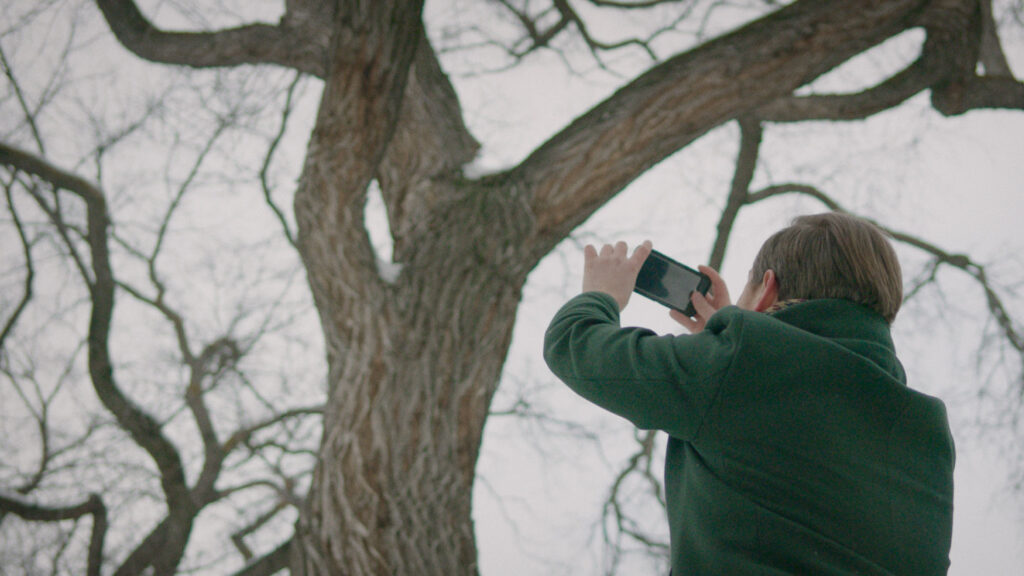
We’ve interviewed a lot of people making this show, each with some expertise that instructs what a sustainable future could look like. They’ve got the facts and figures to back up their point, but it was rarely the facts and figures that sparked their passion.
They wanted to imagine a future that makes them happy. They wanted to be able to picture a tomorrow where people can sit in the shade of a big old tree, take shelter under its canopy and watch it do the same for generation after generation. They wanted to feel OK when they thought about the future, even if it was hard to think about sometimes.
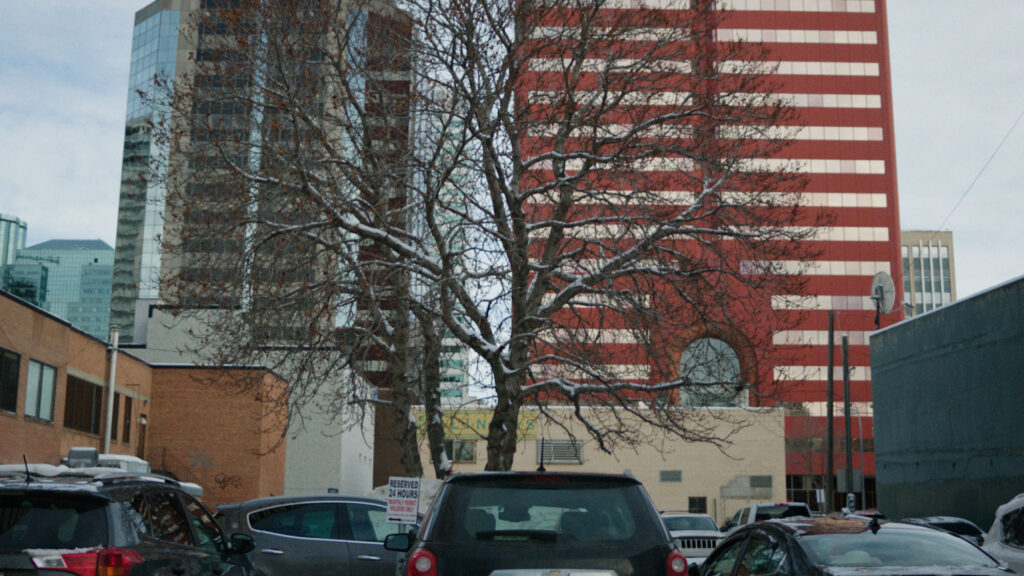
So they planted a seed, so that someday, someone could sit in its shade.
Thanks for watching Renewable. On behalf of the whole team, it’s been a pleasure to make. And to learn more about Dustin and our beautiful urban forest, check out this last episode.
Editor’s note: the pic at the top of the posts shows Dustin Bajer next to some trees.
The Renewable Series Team is composed of the City of Edmonton’s Energy Transition group and the creative minds at Sticks & Stones.
For more information, visit edmonton.ca/RenewableSeries.