

Renewable is a series about visionaries, creators, community leaders and above all else, Edmontonians, each with a unique vision of a sustainable future in the heart of Canada’s fossil fuel industry.
Do climate protests have a real long term impact on the fight for sustainability? Figuring out whether any change that follows is a result of the protest, or if the protest is an expression of change that was already unfolding, gets pretty muddy. It’s like trying to figure out if people in a loud restaurant are shouting because it’s loud, or if it’s loud because everyone is shouting.
You start going in circles. But two local teenagers have managed to cut through all the noise.

Luke and Alyssa, the subjects of this episode of Renewable, are two teenagers who became involved in the local climate change organizing community at the start of this past summer. By the end, they were helping organize marches and rallies that saw thousands of people from across the city coming out in support of climate action.
In the episode, we spoke with Luke and Alyssa about this whirlwind experience. We asked them why they got involved, spoke to the realities of taking part in a global movement and the unique vantage point that their age offered them in working with a network of other local, youth and Indigenous organizers.
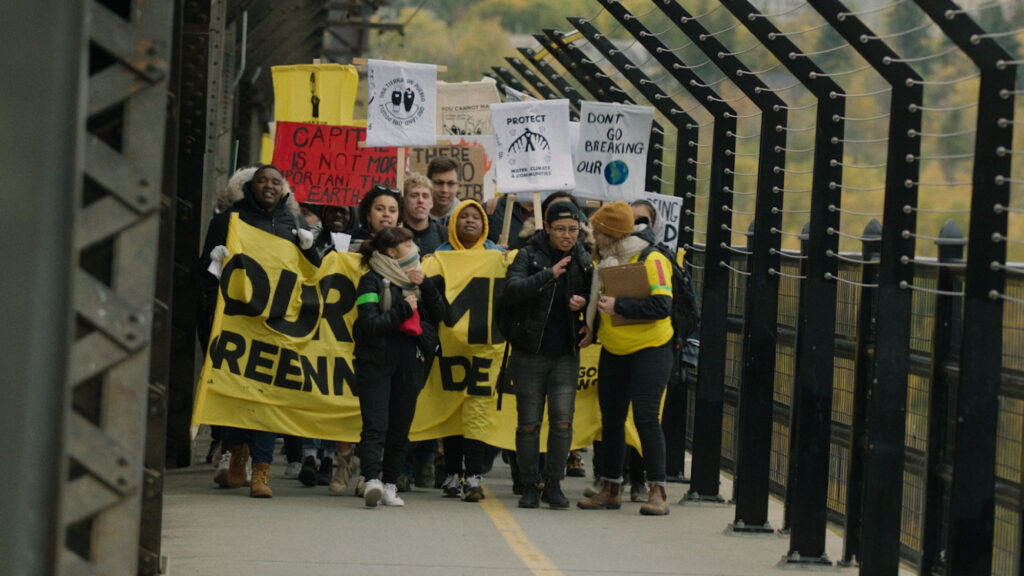
With so much of our conversation centered on why they were participating, we weren’t able to dig into the question of impact: What comes of all this?
According to an analysis published in the Washington Post, if we look at mass protests of the past we do see a measurable long term impact in both polling and voting data in places where protests took place versus places where it didn’t. In analyzing records in the decades following the civil rights movement, their research identified three major variables that affected eventual protest impact: protest messaging, whether the protest was nonviolent and if it successfully organized people to keep taking action after the protest was done.
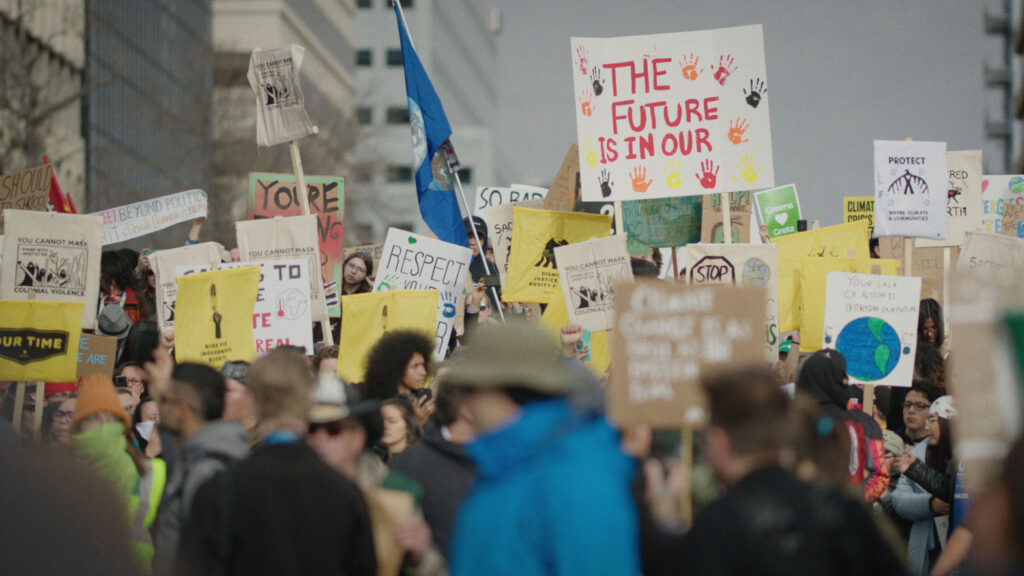
That last one, protest as a long term organizing tool, seems most relevant to our discussion with Luke and Alyssa. He put it to us quite plainly that he “know(s) some people who don’t even feel that they can make it to the protests because it’s too upsetting.” That sense of climate anxiety and grief seems to operate as both a deterrent to, and potentially the reason why, people who participate in a single march or event might continue to advocate for climate action after everyone has gone home—action as a balm to a feeling of helplessness.
And while we don’t have a great deal of data about the particular motivations behind the recent international rise of climate organizing, if we look to the data points of the past—of what made that organizing effective—we see that the reasons why so many young people are coming out might be the exact reason why they keep coming out.
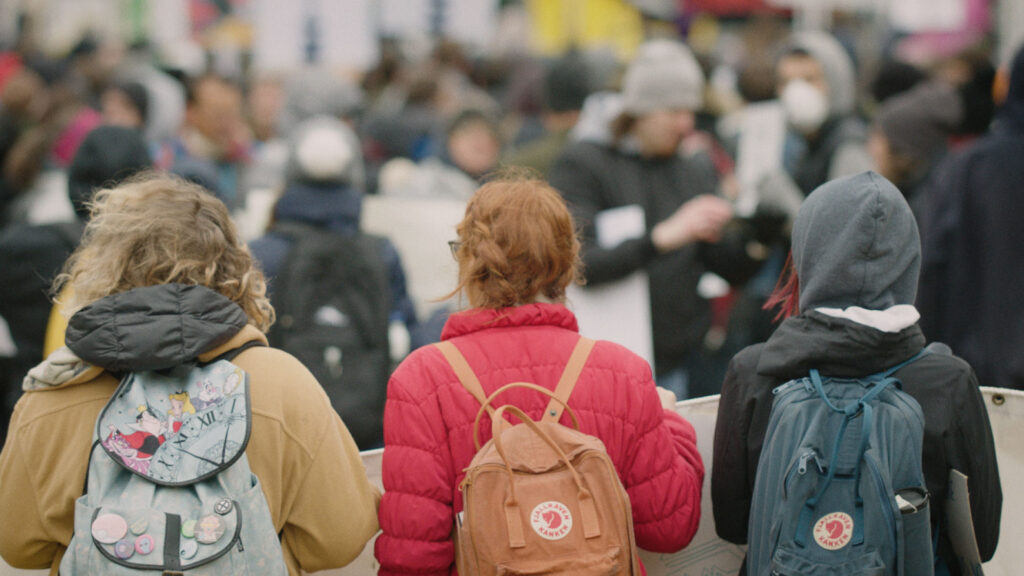
And if the feelings of very real anxiety that are driving so many of Luke and Alyssa’s cohorts locally and around the world to come together around climate action are any indication, it might be the essential ingredient in making sure that these actions have a real long term impact in the fight for sustainability.
The point is, that restaurant from the clumsy metaphor at the beginning? It’s getting louder.
To learn more about Edmonton Youth for Climate, check out this latest episode of Renewable.
Warming stripes
On August 9, 2022, Edmonton Youth for Climate (EYFC) painted a mural of warming stripes at 8115 104 Street. This mural is part of an initiative led by the same group titled “Visions For The Future: The Edmonton Climate Art Project.” The project aims to raise awareness on climate change through artistic expression.
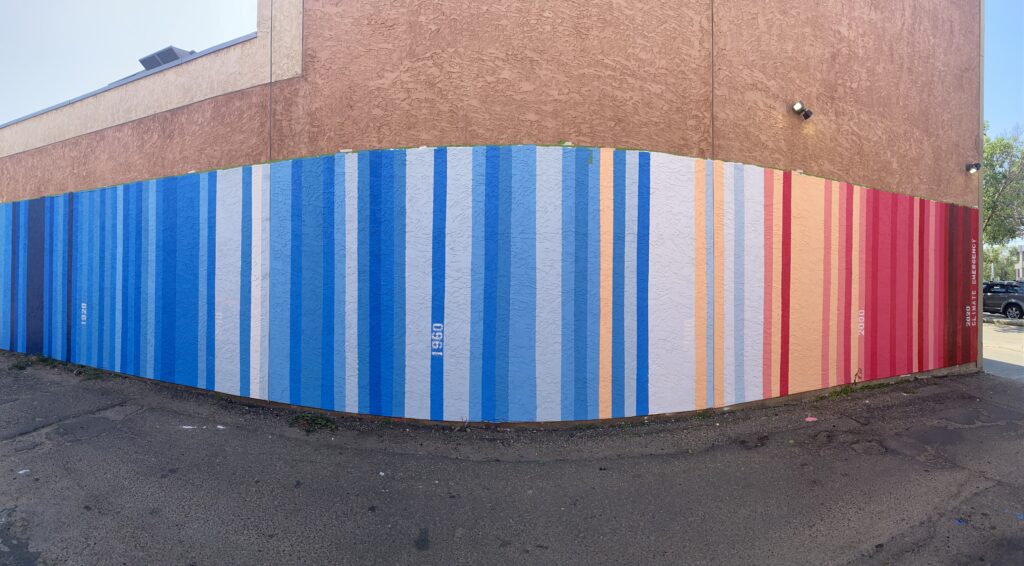
The mural is a visual representation of global warming over the last century. The group painted one stripe for each year between 1900 to 2021. Global average temperatures have already risen by 1.2 degrees since pre-industrial levels, and warming in the last few decades is evident.
Mural artist Jill Stanton assisted youth from EYFC paint the mural. With the mural, Edmonton Youth for Climate seek to raise awareness and stress the importance of climate action in the city. We encourage readers to visit a climate-art exhibit EYFC will be putting up at City Hall from October 2 to October 21, 2022 as the culmination to their art project.
Editor’s note: the pic at the top of the post shows a crowd protesting for climate change action outside the Alberta Legislature building.
The Renewable Series Team is composed of the City of Edmonton’s Energy Transition group and the creative minds at Sticks & Stones.
For more information, visit edmonton.ca/RenewableSeries.